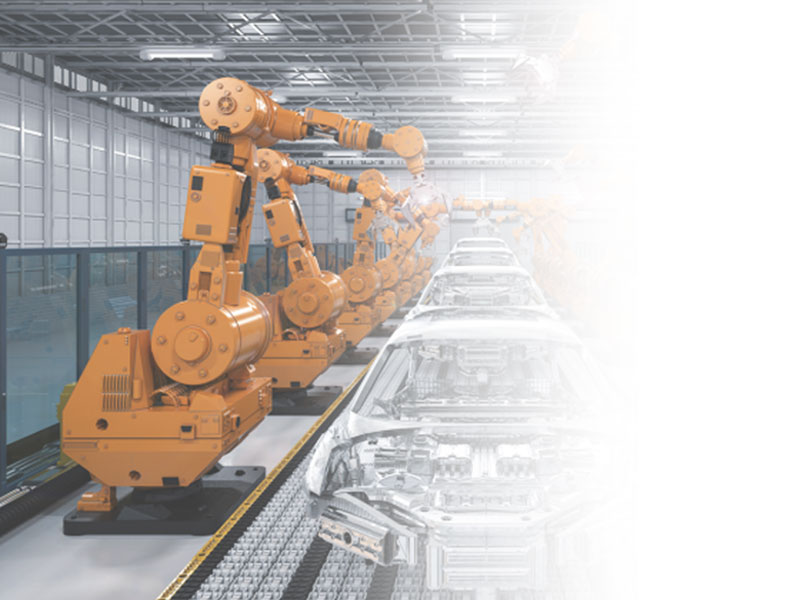
Collaborative robotic welding (Cobot) is a groundbreaking technology transforming the modern manufacturing landscape. Unlike traditional fixed industrial robots, cobot welders are designed to work alongside human operators, providing unmatched flexibility, precision, and safety. In this article, we explore the key features, industrial benefits, and diverse applications of our WRA and WR robotic welding series.
What is a Collaborative Robotic Welder?
A collaborative robotic welder is an integrated automation system that combines a high-precision 6-axis robotic arm (such as the CR3, CR5, or CR10) with a professional welding power source (Arc or Laser). This device merges the adaptability of manual operation with the mechanical consistency of a machine. It features advanced sensors for collision detection, an intuitive teaching interface, and a mobile workstation (WRA) or 3D workbench (WR), allowing for high-quality welds with minimal human intervention.
Key Features of Robotic Welding Cobots
High Precision & Repeatability: Delivers extreme accuracy with ±0.02mm repeatability, ensuring flawless weld beads and significantly reducing rework.
Rapid Drag-Teaching: Simplifies programming through intuitive lead-through teaching. Operators can manually guide the arm to set paths without complex coding.
Flexible Deployment: The WRA series features a compact, mobile design, allowing the workstation to be repositioned across different factory cells in minutes.
6-DOF Agility: The 6-axis articulated arm provides superior reach and flexibility, easily navigating complex workpiece geometries and multi-angle joints.
Dual-Mode Capability: Supports both high-speed fiber laser welding and stable industrial arc welding (MIG/TIG) within a single robotic platform.
Benefits of Using Robotic Welding Systems
Enhanced Productivity: Robotic automation allows for continuous, high-speed operation, effectively doubling or tripling the output compared to manual welding.
Consistent Quality: Eliminates human fatigue and inconsistency, providing uniform penetration and metallurgical strength for every single joint.
Labor Cost Reduction: Addresses the shortage of skilled welders by allowing one operator to manage multiple robotic stations simultaneously.
Superior Safety: Integrated collision detection and collaborative safety protocols allow robots to work safely near humans without traditional bulky safety cages.
Industrial Applications of Robotic Welders
Our robotic welding solutions are utilized across diverse industries due to their precision and versatility:
Automotive Industry: Precision welding of thin-sheet components, frames, and exhaust systems.
Aerospace & Defense: High-strength welding of lightweight alloys and complex structural parts.
Electronics & Medical: Delicate, low-heat distortion welding for sensitive instruments and enclosures.
Machinery Manufacturing: Heavy-duty arc welding for industrial frames, tanks, and large workpieces using the WR integrated platform.
Furniture & Metal Fabrication: Rapid production of stainless steel frames, racks, and decorative metalwork.
Technical Aspects of Robotic Welding Stations
Robotic Arm (6-DOF): The core 6-axis system providing flexible motion control and millisecond system response speeds.
Welding Power Source: High-performance fiber laser sources or intelligent digital arc welding inverters (MIG/MAG/TIG).
Integrated Control System: An all-in-one electric cabinet that synchronizes the arm, wire feeder, and gas supply for seamless operation.
Advanced Feeders: High-capacity wire feeding mechanisms supporting standard 20kg spools and wire diameters from 0.8mm to 1.6mm.
3D Welding Workbench: A modular, high-stability platform (WR series) for precise workpiece fixturing and positioning.
Future Trends in Robotic Welding Technology
The future of robotic welding is driven by smarter integration. Upcoming trends include AI-powered vision systems for autonomous weld path correction, cloud-based monitoring for predictive maintenance, and enhanced multi-robot synchronization. As factories move toward Industry 4.0, our WRA and WR series will continue to evolve, offering even greater connectivity and autonomous decision-making capabilities to the production floor.
Conclusion
Elevating Manufacturing Through Robotic InnovationSummary: In an era where precision and efficiency define market leadership, the KF Robotic Welding series offers a strategic path to industrial excellence. By integrating advanced 6-axis collaborative technology with high-performance Arc and Laser power sources, our WRA and WR systems bridge the gap between human craftsmanship and mechanical consistency. With ±0.02mm repeatability, flexible mobile deployment, and an intuitive learning interface, we don’t just provide a machine—we deliver a complete solution for the future of smart manufacturing. Transitioning to automated welding has never been more accessible, safe, or rewarding.