The Titanium Paradox: High Performance, High Complexity
In demanding sectors such as aerospace and the manufacturing of high-end precision equipment, titanium alloys have become indispensable core structural materials. Thanks to their exceptional strength-to-weight ratio, outstanding corrosion resistance, and excellent thermal stability, titanium alloys serve as a cornerstone of modern engineering. Consequently, titanium alloy laser cutting has become a crucial and unavoidable topic within the field of laser technology.However, these same physical properties—specifically high melting points and extreme hardness—present significant challenges for traditional fabrication. Conventional cutting methods often result in precision deviations, workpiece damage, and surface defects, failing to meet the rigorous standards of sophisticated production.
I. The Laser Solution: Overcoming Hardness with Energy Density
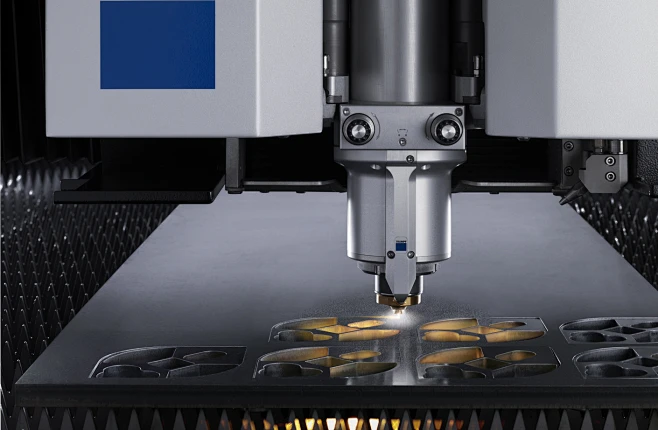
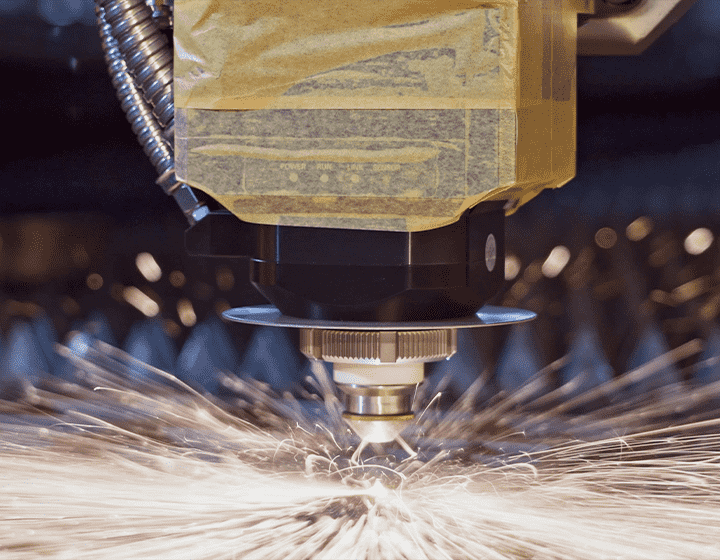
Titanium alloy laser cutting technology has laid a solid technical foundation for high-quality precision machining. This technology utilizes the principle of instantaneous high-energy heating, enabling the laser beam to locally melt and vaporize the material within a timeframe of milliseconds.
This concentrated energy enables the system to precisely “conquer” the high hardness and poor machinability of titanium. The resulting processing efficiency and forming quality far surpass traditional mechanical methods, positioning laser technology as the primary choice for complex titanium components.
II.Superior Surface Integrity and Economic Efficiency
Under high-temperature and high-pressure laser processing conditions, molten material is thoroughly expelled from the kerf. This results in a workpiece cross-section that is exceptionally smooth and clean, with minimal burrs or slag accumulation.
Enhanced Precision:The superior edge quality significantly improves the dimensional accuracy of the component.
Cost Reduction:By providing a finished or near-finished edge, laser cutting minimizes the need for secondary processing, such as grinding or precision polishing. This streamlined workflow directly reduces the Total Cost of Ownership (TCO) for titanium parts.
III. Preserving Mechanical Integrity through Non-Contact Processing
One of the most critical advantages of laser technology is its non-contact processing mode. Throughout the entire cycle, there is no mechanical compression or tool wear. This absence of physical force effectively prevents:
Workpiece Deformation: Maintaining the original geometry of thin-walled parts.
Surface Scratches:Ensuring the aesthetic and functional integrity of the material.
Stress Concentration:Preventing micro-cracks and preserving the original high-performance mechanical properties of the titanium alloy.
Conclusion: The Future of Industrial Upgrading
As the manufacturing of titanium components evolves toward higher complexity, finer precision, and increased intelligence, laser cutting technology has addressed the critical shortcomings of traditional craftsmanship. With its combined advantages of high precision, zero-damage processing, and cost-efficiency, this technology continues to empower the precision mass production of titanium parts. It serves as a solid technical foundation for the industrial upgrading of domestic high-end titanium manufacturing, expanding the application boundaries of this “space-age” metal.