News
3D Fiber Laser Cutting Machine: Redefining Precision in Modern Manufacturing
In the realm of industrial manufacturing, where precision is the difference between innovation and obsolescence, the 3D fiber laser cutting machine stands as a silent revolution. It is not merely a tool but a bridge between digital design and tangible reality, capable of slicing through metals, composites, and even exotic materials with the finesse of a sculptor and the speed of a bullet train. Imagine a technology that can transform a flat sheet of steel into a complex aerospace component, a delicate medical implant, or a futuristic automotive part—all while maintaining tolerances measured in microns. This is the power of 3D fiber laser cutting, a technology that has rewritten the rules of what’s possible in engineering, design, and production.
The Evolution of Laser Cutting: From 2D to 3D
To understand the significance of the 3D fiber laser cutting machine, we must first trace the journey of laser cutting itself. Decades ago, 2D laser cutting dominated the industry, confined to flat surfaces and simple geometries. While revolutionary for its time, it left a gap: the inability to process curved, uneven, or three-dimensional workpieces without manual repositioning—a time-consuming and error-prone process. Enter 3D laser cutting, which emerged in the late 20th century as a response to the demand for more complex, high-precision parts in industries like aerospace and automotive. Early 3D systems relied on CO2 lasers, but their bulk, high energy consumption, and limited wavelength range restricted their potential. The game-changer came with the advent of fiber laser technology. Unlike CO2 lasers, which use gas as a medium, fiber lasers amplify light through optical fibers doped with rare-earth elements like ytterbium. This design not only reduces energy usage by up to 50% but also delivers a narrower, more intense beam—perfect for cutting intricate 3D shapes. Today, the 3D fiber laser cutting machine is the gold standard, combining the flexibility of 3D motion with the efficiency and precision of fiber optics. It is no exaggeration to say that this technology has unlocked new frontiers in manufacturing, enabling the creation of parts once deemed impossible.
How Does a 3D Fiber Laser Cutting Machine Work?
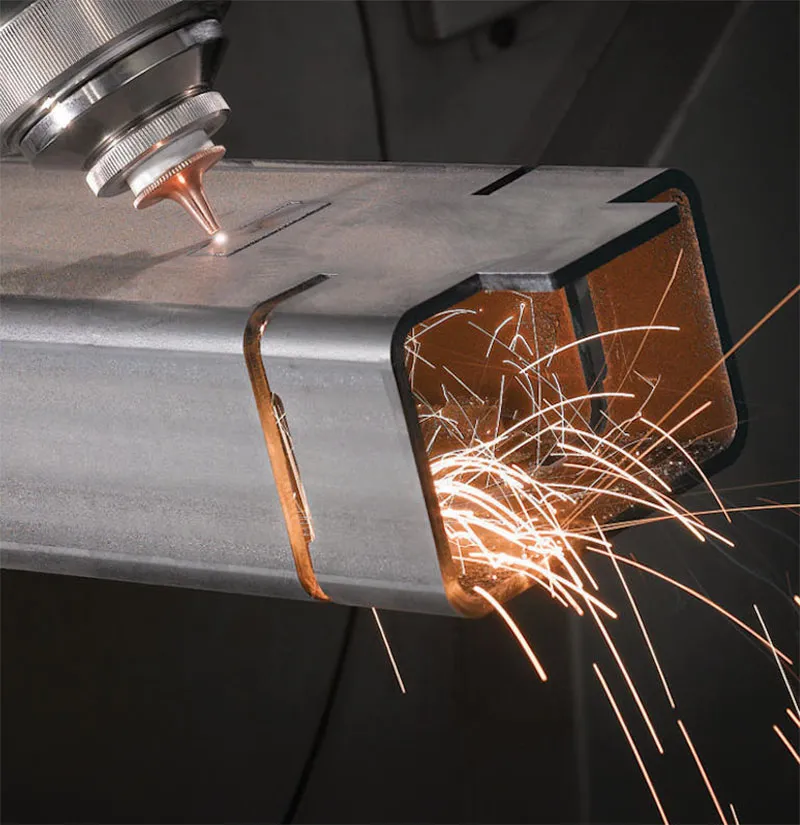
At its core, a 3D fiber laser cutting machine operates on a simple principle: focus a high-powered laser beam onto a material, melting or vaporizing it to create precise cuts. But the magic lies in its ability to manipulate this beam in three-dimensional space, adapting to curved surfaces, angles, and complex contours with unmatched accuracy.
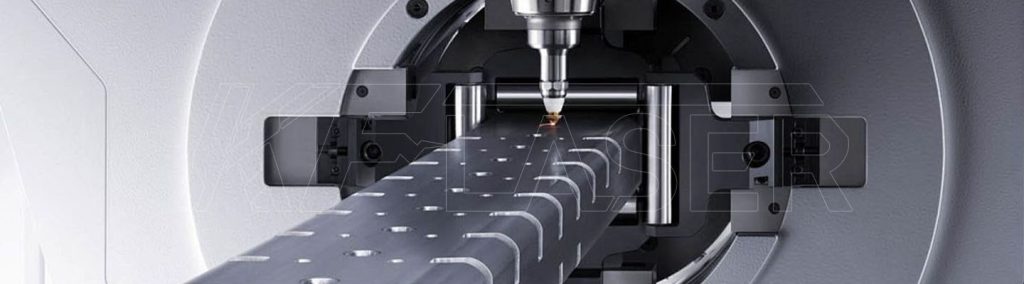
The process begins with a digital 3D model, typically created using CAD software. This model is then converted into machine-readable code (G-code or M-code) that guides the laser’s path. The machine itself consists of several key components: a fiber laser source, a beam delivery system (including mirrors and lenses), a robotic arm or gantry system for 3D movement, and a computer numerical control (CNC) unit.
The fiber laser source generates a beam with a wavelength of around 1.06 micrometers—ideal for absorbing metals like steel, aluminum, and copper. This beam travels through flexible optical fibers to the cutting head, where lenses focus it into a spot as small as 20 microns (about the diameter of a human hair). The robotic arm, often with 6 axes of movement, positions the cutting head around the workpiece, adjusting its angle and distance in real time to maintain optimal cutting conditions.
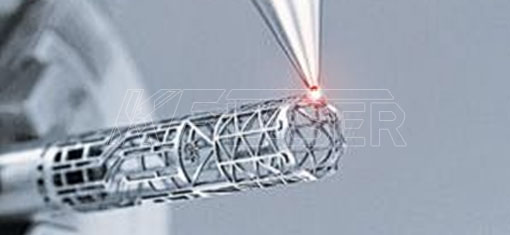
What sets 3D fiber laser cutting apart is its dynamic adaptability. Sensors integrated into the machine continuously monitor the workpiece’s surface, compensating for vibrations, thermal expansion, or minor deviations in material thickness. This ensures that even on curved or uneven surfaces, the laser maintains consistent depth and precision. Whether cutting a turbine blade with complex airfoils or a medical stent with microscopic pores, the 3D fiber laser cutting machine delivers results that were once the stuff of science fiction.
Key Advantages of 3D Fiber Laser Cutting Machine
The rise of 3D fiber laser cutting machine in manufacturing is no accident. Their unique combination of speed, precision, and versatility offers advantages that traditional cutting methods—such as plasma cutting, waterjet cutting, or mechanical machining—simply cannot match.
Unrivaled Precision: Fiber lasers produce a focused beam with minimal heat-affected zones (HAZ), reducing material distortion and ensuring cuts with tolerances as tight as ±0.01 mm. This is critical for industries like aerospace, where even a fraction of a millimeter can compromise safety.
Speed and Efficiency: Fiber lasers convert electrical energy into laser energy with efficiency rates of up to 30%, compared to 10% for CO2 lasers. This not only lowers operating costs but also increases cutting speed—up to 5 meters per minute for thin metals. For high-volume production, this translates to shorter lead times and higher throughput.
Material Versatility: While 3D fiber laser cutting is often associated with metals, it can process a wide range of materials, including composites, plastics, and even ceramics. This flexibility makes it indispensable in industries as diverse as automotive, medical, and consumer electronics.
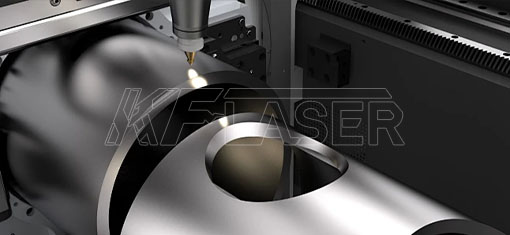
Complex Geometry Handling: Unlike 2D laser cutters, which are limited to flat sheets, 3D systems can cut bevels, notches, and contours on three-dimensional workpieces. This eliminates the need for multiple setups or manual finishing, reducing labor costs and human error.
Reduced Waste: The precision of fiber laser cutting minimizes material waste, a critical factor in industries where raw materials (such as titanium or carbon fiber) are expensive. Additionally, the narrow kerf (cut width) of fiber lasers—often less than 0.1 mm—allows for tighter nesting of parts, further optimizing material usage.
Low Maintenance: Fiber laser systems have fewer moving parts than CO2 lasers, reducing the risk of breakdowns and lowering maintenance costs. The absence of gas chambers or mirrors that require frequent alignment also means less downtime.
Applications Across Industries
The impact of 3D fiber laser cutting machine spans nearly every sector of manufacturing, from heavy industry to high-tech precision engineering. Let’s explore how this technology is transforming key industries:
Aerospace and Defense
In aerospace manufacturing, where components must withstand extreme temperatures, pressure, and fatigue, precision is non-negotiable. 3D fiber laser cutting machine is used to fabricate turbine blades, engine casings, and structural components from heat-resistant alloys like Inconel and titanium. The ability to cut complex shapes with minimal HAZ ensures these parts meet strict safety standards while reducing weight—a critical factor for fuel efficiency.
Automotive
The automotive industry relies on 3D fiber laser cutting for both prototyping and mass production. From cutting door panels and chassis components to creating intricate designs in decorative trim, the technology enables automakers to reduce material waste and integrate lightweight materials like aluminum and carbon fiber. In electric vehicle (EV) manufacturing, 3D laser cutting is used to shape battery housings and motor components, where precision directly impacts performance and safety.
Medical Devices
Medical device manufacturing demands microscopic precision and biocompatibility. 3D fiber laser cutting machine produces stents, surgical tools, and implantable devices with features as small as 50 microns. The non-contact nature of laser cutting eliminates the risk of contamination, while the ability to process materials like stainless steel, titanium, and bioabsorbable polymers makes it ideal for medical applications.
Architecture and Art
Beyond industrial uses, 3D fiber laser cutting has found a place in architecture and art. Designers use it to create intricate metal facades, decorative screens, and sculptures with organic, flowing shapes that would be impossible to achieve with traditional tools. For example, the 2020 Tokyo Olympics’ National Stadium features a steel roof with 3D laser-cut patterns, combining structural integrity with aesthetic beauty.
Energy and Renewable Resources
In the energy sector, 3D fiber laser cutting machine fabricate components for wind turbines, solar panels, and oil rigs. Wind turbine blades, which require precise aerodynamic profiles, are often cut using 3D lasers to ensure optimal energy efficiency. Solar panel frames, made from aluminum or steel, benefit from the technology’s speed and precision, reducing production costs and improving durability.
Factors to Consider When Choosing a 3D Fiber Laser Cutting Machine
Investing in a 3D fiber laser cutting machine is a significant decision, and selecting the right system requires careful consideration of several factors:
Laser Power: The laser’s power (measured in watts) determines the thickness and type of material it can cut. For thin metals (up to 3 mm), a 500W laser may suffice, while thick steel (10 mm or more) requires 2000W or higher.
Working Envelope: The machine’s working volume (X, Y, Z axes) must accommodate the size of your workpieces. Robotic arm systems offer greater flexibility for large or irregularly shaped parts, while gantry systems are better for high-speed, repetitive cutting of smaller components.
Axis Configuration: Most 3D laser cutting machines have 5 or 6 axes of movement. Six-axis systems provide the greatest flexibility, allowing the cutting head to tilt and rotate around the workpiece for complex geometries.
Software Compatibility: The machine’s CNC software should integrate seamlessly with your existing CAD/CAM tools. Look for features like real-time simulation, material database libraries, and adaptive cutting technology to optimize performance.
After-Sales Support: Laser cutting machines require regular maintenance, and reliable technical support is essential. Choose a manufacturer with a global service network and a reputation for responsive customer service.
Cost of Ownership: While upfront costs are important, consider long-term expenses such as energy consumption, spare parts, and maintenance. Fiber lasers generally have lower operating costs than CO2 lasers, making them a more economical choice over time.
Future Trends in 3D Fiber Laser Cutting Technology
As technology advances, the capabilities of 3D fiber laser cutting machines continue to expand, opening new possibilities for innovation. Here are some emerging trends to watch:
Increased Automation: The integration of artificial intelligence (AI) and machine learning is enabling “smart” laser cutting systems that can self-optimize cutting parameters, detect defects in real time, and even predict maintenance needs. This reduces the need for human intervention and improves overall efficiency.
Higher Power Lasers: Advances in fiber laser technology are pushing power levels beyond 15 kW, allowing for faster cutting of thicker materials. This is particularly useful for heavy industries like shipbuilding and construction.
Hybrid Manufacturing: Combining 3D laser cutting with additive manufacturing (3D printing) is creating hybrid systems that can both build and shape parts in a single process. For example, a 3D-printed metal component can be precision-cut and finished using a laser, reducing production steps and improving accuracy.
Green Technology: Manufacturers are developing more energy-efficient laser sources and recyclable machine components to reduce the environmental impact of 3D laser cutting. Solar-powered laser systems and water-based cooling solutions are also on the horizon.
Miniaturization: As demand for micro-components grows (e.g., in electronics and medical devices), 3D fiber laser cutting machines are being scaled down to handle smaller workpieces with even greater precision. Some systems now offer sub-micron tolerances, opening doors for applications in nanotechnology.
Common Misconceptions About 3D Fiber Laser Cutting Machine
Despite their widespread use, several misconceptions about 3D fiber laser cutting machine persist, hindering some manufacturers from adopting the technology:
“They are too expensive for small businesses.” While high-end 3D laser cutting machines can cost hundreds of thousands of dollars, there are affordable options for small and medium-sized enterprises (SMEs). Additionally, the long-term savings in labor, material waste, and energy costs often offset the initial investment.
“They are only suitable for metals.” While fiber lasers excel at cutting metals, modern systems can process plastics, composites, and even wood with the right adjustments. This versatility makes them valuable across industries.
“3D laser cutting is slower than 2D.” While 3D cutting may take longer for simple shapes, it eliminates the need for secondary operations (e.g., bending, welding, or manual finishing), reducing overall production time for complex parts.
“They require highly skilled operators.” Modern CNC software has simplified machine operation, with intuitive interfaces and automated features that reduce the learning curve. Many manufacturers offer training programs to help operators get up to speed quickly.
Maintenance Tips for Maximizing Machine Lifespan
To ensure your 3D fiber laser cutting machine operates at peak performance for years to come, follow these maintenance best practices:
Clean the Optics Regularly: Dust, smoke, and debris can accumulate on lenses and mirrors, reducing beam quality and cutting precision. Clean optics with lint-free wipes and specialized cleaning solutions weekly, or more frequently for high-volume operations.
Check Alignment: Misaligned mirrors or lenses can cause beam distortion and uneven cutting. Perform alignment checks monthly using laser alignment tools, and recalibrate as needed.
Monitor Cooling Systems: Fiber lasers generate heat, and proper cooling is essential to prevent overheating. Check coolant levels and temperatures daily, and replace filters and coolant according to the manufacturer’s recommendations.
Lubricate Moving Parts: The machine’s robotic arm or gantry system relies on smooth movement. Lubricate bearings, gears, and rails regularly to reduce friction and wear.
Inspect Cables and Connections: Over time, cables can become damaged or loose, leading to signal interference or equipment failure. Inspect all electrical and optical cables monthly, and replace any that show signs of wear.
Update Software: Manufacturers frequently release software updates to improve performance, add new features, or fix bugs. Keep your CNC software up to date to ensure compatibility and optimal operation.
Conclusion
The 3D fiber laser cutting machine is more than a manufacturing tool—it is a catalyst for innovation, enabling industries to push the boundaries of what’s possible. From aerospace to art, its precision, speed, and versatility have transformed the way we design and create, making it an indispensable asset in the modern industrial landscape. As technology continues to evolve, we can expect even greater advancements, further cementing the 3D fiber laser cutting machine’s role as a cornerstone of 21st-century manufacturing. For businesses looking to stay competitive in a rapidly changing world, investing in this technology is not just a choice—it is a necessity.
Whether you’re a small workshop or a multinational corporation, the 3D fiber laser cutting machine offers a path to greater efficiency, higher quality, and endless creative potential. It is a testament to human ingenuity, a tool that turns imagination into reality, one precise cut at a time.
Top Stories
Product Categories
- Metal Laser Cutter
- Laser Welder Machine
- Laser Cleaner Machine
- Laser Marker Machine
- Press Brake Machine