News
Fiber Laser Steel Cutting | Precision & Power
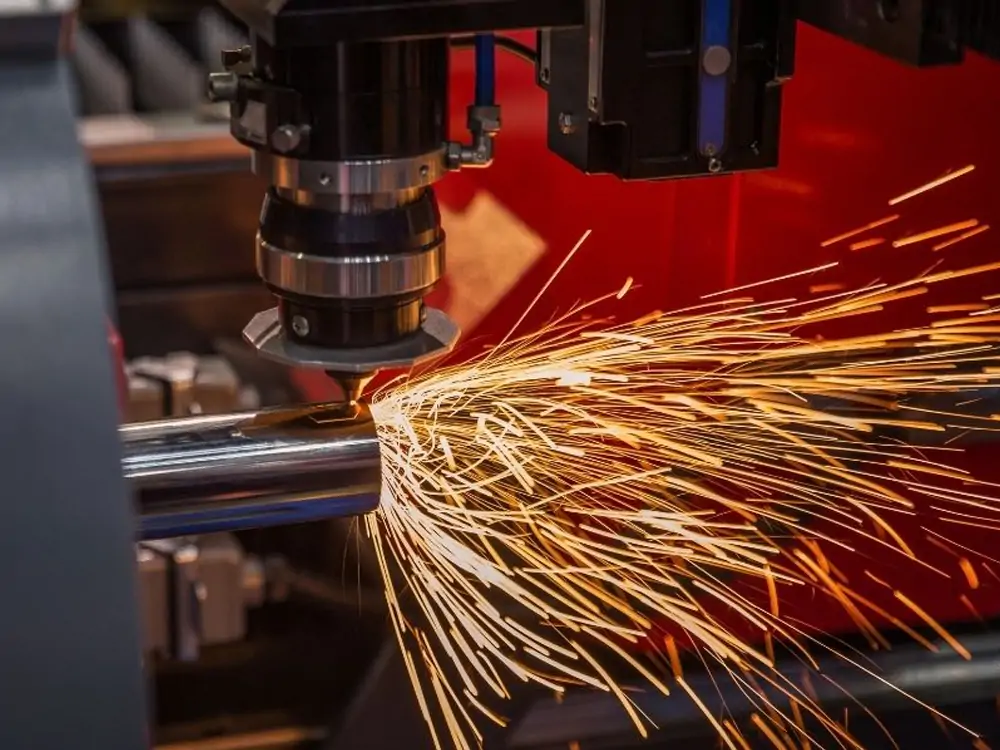
In the heart of modern manufacturing, where milliseconds matter and precision is non-negotiable, fiber laser steel cutting stands as a revolutionary force reshaping how industries slice through metal. Imagine a technology so precise it can carve intricate patterns into steel sheets thinner than a human hair, yet so powerful it can slice through thick steel plates like a hot knife through butter. This isn’t science fiction—it’s the reality of fiber laser steel cutting, a process that has transformed automotive production lines, aerospace engineering, and even artistic metalwork. For manufacturers, fabricators, and engineers, understanding this technology isn’t just an advantage; it’s a necessity to stay competitive in a world where efficiency and accuracy reign supreme.
The Science Behind Fiber Laser Steel Cutting: How Light Becomes a Cutting Tool
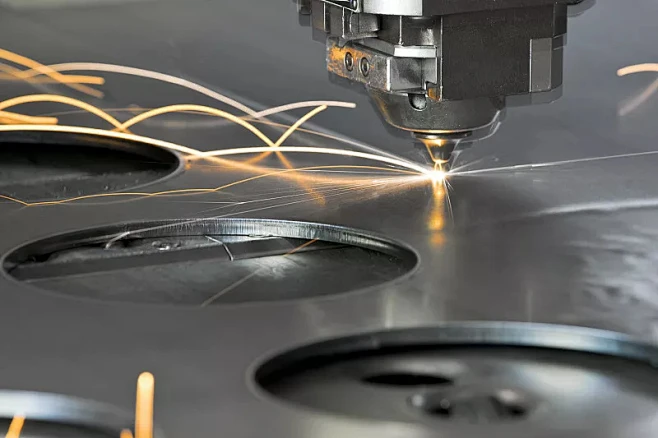
At its core, fiber laser steel cutting is a marriage of physics and engineering, leveraging the unique properties of laser light to melt, vaporize, or blow away steel with pinpoint accuracy. Unlike traditional cutting methods such as plasma or oxy-fuel, which rely on heat generated by chemical reactions or electrical arcs, fiber lasers use amplified light energy transmitted through flexible optical fibers. This light, typically operating at a wavelength between 1060 and 1080 nanometers, is absorbed by steel, converting into intense heat that melts the material. A high-pressure gas jet—often nitrogen, oxygen, or compressed air—then blows the molten metal away, leaving a clean, precise cut.
What makes fiber lasers particularly effective for steel cutting? Their wavelength is uniquely suited to be absorbed by ferrous metals like steel, ensuring minimal energy loss and maximum cutting efficiency. Unlike CO2 lasers, which struggle with reflective materials, fiber lasers maintain stability even when cutting highly reflective steel alloys, reducing the risk of beam deflection and improving cut quality. This inherent efficiency translates to faster cutting speeds: a fiber laser can cut through 1mm mild steel at speeds up to 50 meters per minute, outperforming traditional methods by 30-50% in many cases.
Key Advantages Over Traditional Cutting Methods
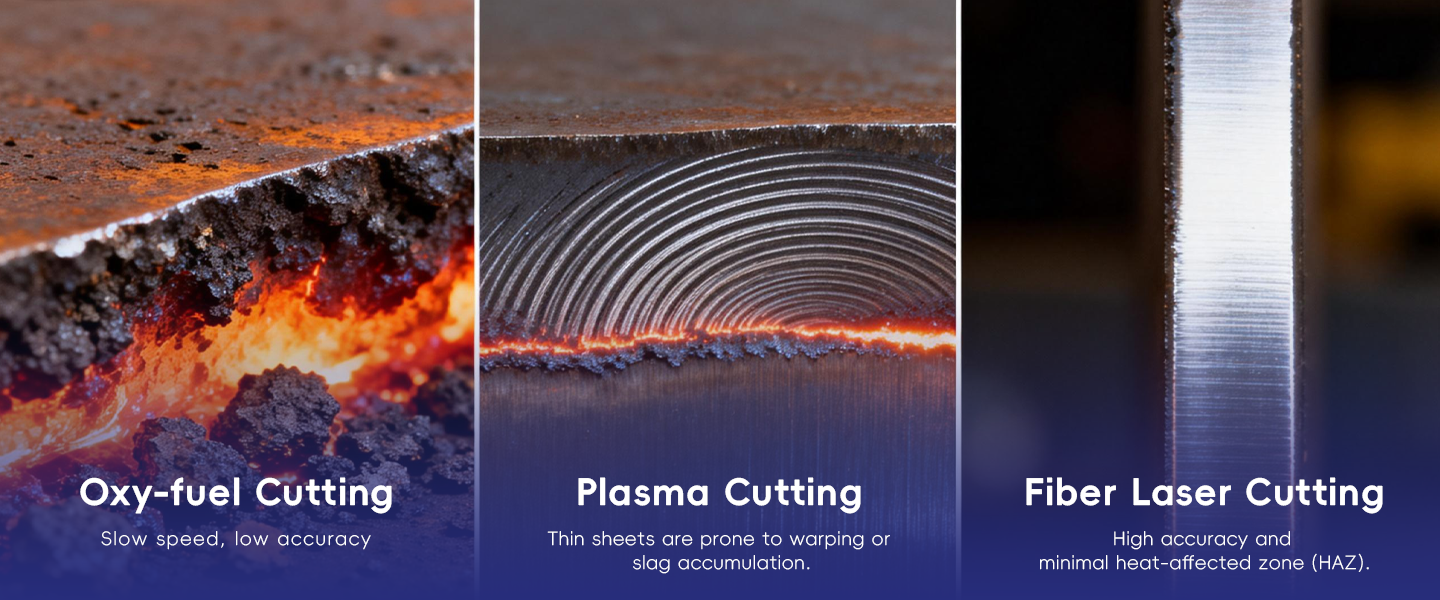
To truly appreciate fiber laser steel cutting, one must compare it to the technologies it has displaced. Oxy-fuel cutting, a staple for decades, uses a flame to heat steel to its ignition temperature before introducing oxygen to burn through the material. While effective for thick steel, it is slow, imprecise, and leaves a rough, oxidized edge requiring post-processing. Plasma cutting, which uses a high-velocity ionized gas jet, offers faster speeds but struggles with thin steel, often causing warping or dross buildup.
Fiber laser steel cutting eliminates these drawbacks. Its precision is unmatched: tolerances as tight as ±0.01mm are achievable, making it ideal for industries like aerospace, where component accuracy directly impacts safety. The narrow kerf width—the width of the cut itself—minimizes material waste, a critical factor in reducing costs for high-value steel alloys. Additionally, fiber lasers produce minimal heat-affected zones (HAZ), the area of metal altered by heat during cutting. A smaller HAZ means less distortion, fewer micro-cracks, and reduced need for post-cutting treatments like grinding or annealing.
Cost efficiency is another defining advantage. Fiber lasers have lower operating costs than CO2 lasers, consuming up to 70% less electricity. Their solid-state design requires minimal maintenance—no mirrors to align or gases to replace—reducing downtime and service expenses. For small to medium enterprises (SMEs), this translates to faster return on investment (ROI), even for high-powered systems.
Applications Across Industries: Where Fiber Laser Steel Cutting Shines
The versatility of fiber laser steel cutting has made it indispensable across a spectrum of industries, each leveraging its unique strengths to solve complex challenges.
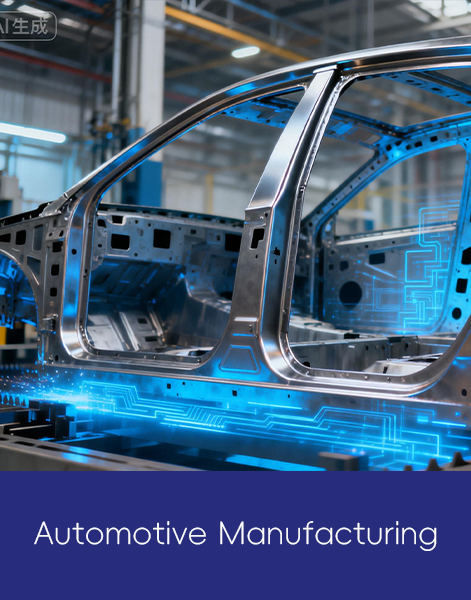
Automotive Manufacturing: In automotive plants, fiber lasers cut chassis components, engine parts, and body panels with micron-level precision. The ability to process high-strength steel (HSS) and advanced high-strength steel (AHSS)—materials critical for lightweight, crash-resistant vehicles—has made fiber lasers a cornerstone of modern car production. For example, cutting door reinforcement beams from 2mm boron steel requires the speed and accuracy only fiber lasers can provide, ensuring consistent quality across thousands of units.
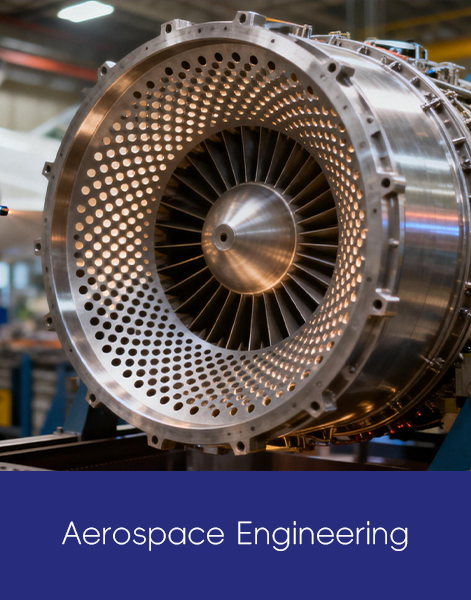
Aerospace Engineering: The aerospace industry demands materials that are both strong and lightweight, such as titanium alloys and high-strength steel. Fiber laser steel cutting meets this demand by offering clean, burr-free cuts on components like turbine blades, landing gear parts, and airframe structures. The technology’s ability to cut complex 3D shapes—when paired with robotic arms—enables the production of parts with geometries that would be impossible with traditional tools.
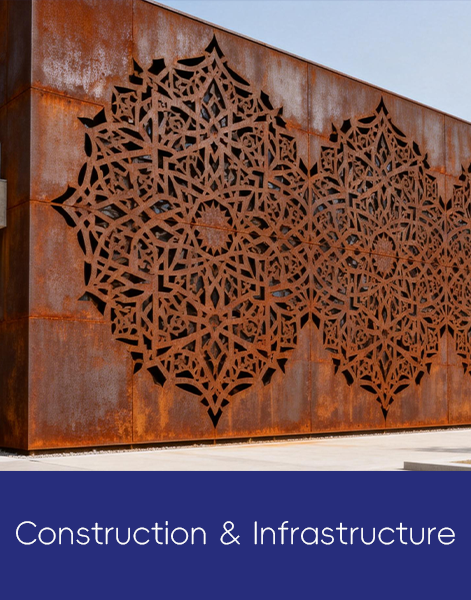
Construction and Infrastructure: From structural steel beams in skyscrapers to decorative metal facades on commercial buildings, fiber laser cutting streamlines construction workflows. Its speed allows fabricators to process large steel sheets quickly, while its precision ensures that pre-cut components fit together seamlessly on-site, reducing assembly time and errors. Even in architectural metalwork, fiber lasers create intricate designs on steel panels, merging functionality with aesthetic appeal.
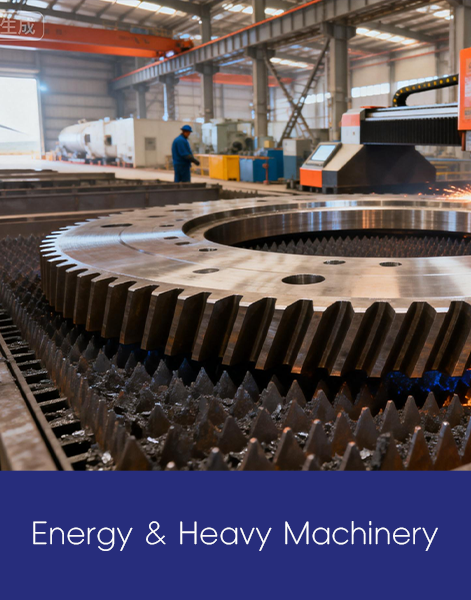
Energy and Heavy Machinery: In the energy sector, fiber laser steel cutting is used to fabricate components for power plants, wind turbines, and oil rigs. Cutting thick steel plates (up to 50mm or more) for pressure vessels or gearboxes requires the high power of modern fiber lasers, which deliver consistent results even in heat-resistant alloys. The technology’s reliability is critical here, as any defect in these components could lead to catastrophic failures.
Techniques and Best Practices for Optimal Results
While fiber laser steel cutting is powerful, achieving optimal results requires careful attention to technique and parameter adjustment. The choice of laser power, cutting speed, gas type, and focal length depends on the steel’s thickness, alloy composition, and desired cut quality.
Laser Power and Thickness Matching: For thin steel (0.5-3mm), a 1-3kW fiber laser suffices, delivering fast, precise cuts with minimal HAZ. Thicker steel (10-30mm) requires higher power (4-10kW) to ensure the laser penetrates the material completely. Exceeding the recommended power for a given thickness can lead to excessive heat buildup, causing warping or dross formation.
Gas Selection: The assist gas plays a critical role in determining cut quality. Oxygen is often used for cutting mild steel, as it reacts with the metal to produce additional heat, increasing cutting speed. However, this reaction leaves an oxidized edge, which may require post-processing. Nitrogen, an inert gas, prevents oxidation, resulting in a clean, bright edge ideal for applications where aesthetics matter, though it consumes more gas and is slower. Compressed air is a cost-effective alternative for non-critical applications but may introduce impurities.
Focal Length and Nozzle Design: The laser’s focal length affects the beam’s spot size and energy density. A shorter focal length (e.g., 125mm) creates a smaller spot, ideal for thin steel and fine details, while a longer focal length (e.g., 200mm) distributes energy over a larger area, better suited for thick steel. The nozzle, which directs the assist gas, must be chosen based on material thickness—larger nozzles allow higher gas flow rates for thicker cuts, preventing molten metal from re-adhering to the workpiece.
Material Preparation: Even the best laser system cannot compensate for poor material quality. Steel sheets with surface contaminants like oil, rust, or paint can absorb laser energy unevenly, leading to inconsistent cuts. Proper cleaning and degreasing before cutting are essential, as is ensuring the material is flat and securely clamped to prevent vibration during cutting.
Overcoming Challenges in Fiber Laser Steel Cutting
Despite its many advantages, fiber laser steel cutting is not without challenges. Understanding and mitigating these issues is key to maximizing productivity and quality.
Reflective Alloys: While fiber lasers handle reflectivity better than CO2 lasers, highly reflective steel alloys (e.g., stainless steel with high nickel content) can still redirect some laser energy back into the system, potentially damaging optics. To address this, modern lasers use sensors to detect reflections and adjust power levels in real time, while protective coatings on lenses minimize damage.
Thick Steel Cutting: Cutting steel thicker than 25mm requires balancing power, speed, and gas flow to avoid dross—a molten metal residue that adheres to the cut edge. Operators often use “piercing” techniques, where the laser gradually increases power to create a hole before starting the cut, reducing the risk of dross formation. Additionally, using high-pressure nitrogen or oxygen helps blow away molten metal more effectively in thick sections.
Heat Management: Prolonged cutting of thick steel generates significant heat, which can warp the material or degrade cut quality. To mitigate this, fabricators use cooling systems for the laser source and workpiece, while optimizing cut paths to minimize heat accumulation in one area (e.g., cutting inner shapes first, then outer contours).
Cost of Entry: While fiber lasers offer long-term cost savings, the initial investment can be prohibitive for small businesses. However, advancements in technology have led to more affordable mid-power lasers (1-3kW) suitable for SMEs, while leasing options and used equipment markets provide alternative entry points.
The Future of Fiber Laser Steel Cutting: Trends and Innovations
As technology evolves, fiber laser steel cutting continues to push boundaries, opening new possibilities for industrial applications.
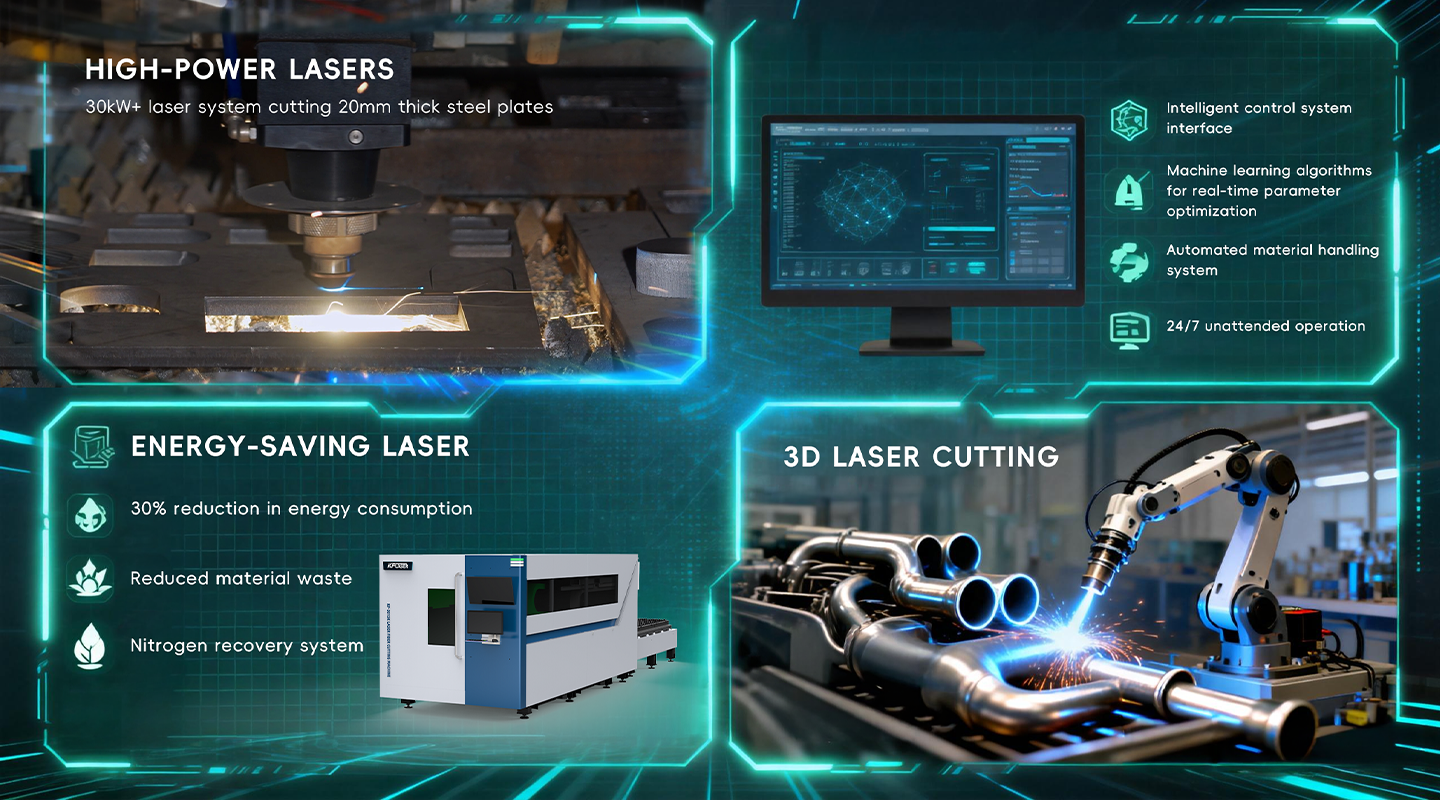
Higher Power Lasers: The development of 20kW+ fiber lasers is enabling faster cutting of thick steel, with some systems capable of slicing through 50mm steel at speeds previously unthinkable. This not only increases productivity but also reduces the need for secondary processes like grinding, as higher power often results in cleaner cuts.
Integration with AI and Automation: Artificial intelligence (AI) is transforming fiber laser cutting by optimizing parameters in real time. Machine learning algorithms analyze cut quality, adjust power and speed dynamically, and predict maintenance needs, reducing downtime and human error. When paired with automated material handling systems, AI-powered lasers can operate 24/7 with minimal supervision, further boosting productivity.
Green Technology: As sustainability becomes a priority, fiber lasers are becoming more energy-efficient, with some models consuming up to 30% less power than older systems. Additionally, the precision of laser cutting reduces material waste, aligning with circular economy principles. Innovations in gas recycling systems are also minimizing the environmental impact of assist gases like nitrogen.
3D Laser Cutting: Traditional fiber lasers cut flat sheets, but 3D laser cutting systems—using robotic arms with fiber laser heads—are revolutionizing the production of complex, curved steel components. From automotive exhaust systems to aerospace ducting, 3D cutting eliminates the need for multiple setups, reducing production time and costs.
Why Fiber Laser Steel Cutting is a Game-Changer for Your Business
For manufacturers and fabricators, investing in fiber laser steel cutting is more than a technological upgrade—it’s a strategic decision that drives growth. The technology’s precision reduces waste and rework, its speed increases throughput, and its versatility opens doors to new markets (e.g., custom metal art, medical device components). In an era where customers demand faster turnaround times and higher quality, fiber laser cutting delivers a competitive edge that is hard to match with traditional methods.
Consider this: a mid-sized fabrication shop replacing plasma cutters with a 4kW fiber laser can increase production by 40% while reducing material waste by 15%. Over time, these gains translate to lower costs, higher profit margins, and the ability to take on more complex projects. For businesses looking to scale, fiber laser steel cutting isn’t just a tool—it’s a catalyst for innovation and success.
In the end, fiber laser steel cutting is more than a manufacturing process; it’s a testament to human ingenuity, turning light into a precision instrument that shapes the world around us. As industries continue to evolve, one thing is clear: the future of steel cutting is bright—and it’s powered by fiber lasers. Whether you’re a seasoned manufacturer or a startup looking to make your mark, embracing this technology is the first step toward cutting through the competition and carving out a place at the forefront of modern manufacturing.

Top Stories
Product Categories
- Metal Laser Cutter
- Laser Welder Machine
- Laser Cleaner Machine
- Laser Marker Machine
- Press Brake Machine