News
Beyond the Spark: Decoding the Revolution of Precision Lasercutting Metal.
Lasercutting metal has fundamentally reshaped manufacturing, transforming raw sheets into intricate components with a speed and accuracy once deemed impossible. Picture a beam of concentrated light, thinner than a human hair, vaporizing or melting metal along a digitally programmed path, leaving edges smoother than most machined surfaces. This is the alchemy of modern lasercutting metal, a process where heat meets pinpoint control. Industries from aerospace to art rely on its unmatched ability to produce complex geometries, micro-details, and burr-free parts consistently. The shift from traditional mechanical cutting or plasma has been seismic, driven by reduced waste, minimal setup times, and the freedom to create designs limited only by imagination.
The Core Mechanics: Light as a Tool:
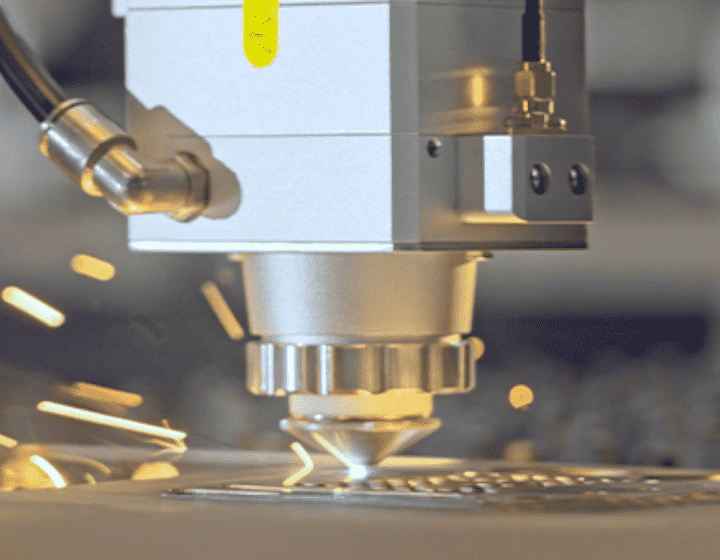
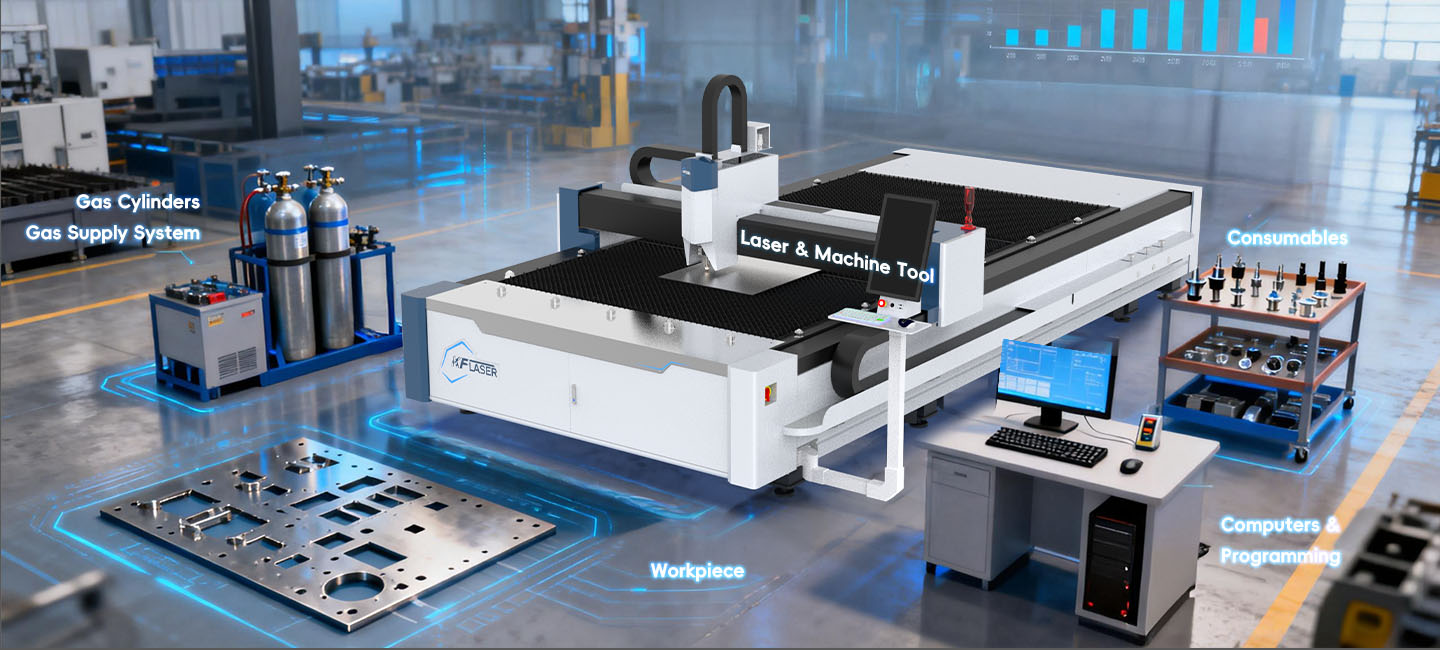
At the heart of lasercutting metal lies the generation of a coherent, high-energy light beam. Fiber lasers, the dominant force today, create this beam within a solid gain medium (doped optical fiber) pumped by diode lasers. This beam is then focused through a series of lenses down to an incredibly fine spot (often 0.1mm or less) onto the metal surface. The intense localized energy density, reaching millions of watts per square centimeter, rapidly heats the metal past its melting or vaporization point. An assist gas, typically nitrogen (N2), oxygen (O2), or compressed air, is blown coaxially through the cutting head nozzle. This gas serves multiple critical functions: it ejects molten material downwards through the kerf (the cut path), protects the focusing lens from spatter and fumes, and, in the case of oxygen, creates an exothermic reaction that significantly boosts cutting speed on ferrous metals like mild steel. The CNC (Computer Numerical Control) system meticulously guides the cutting head along the programmed path, dictating speed, power modulation, gas pressure, and nozzle height with microscopic precision.

Material Capabilities & Limitations:
Lasercutting metal excels across a broad spectrum, but performance varies dramatically by type and thickness.
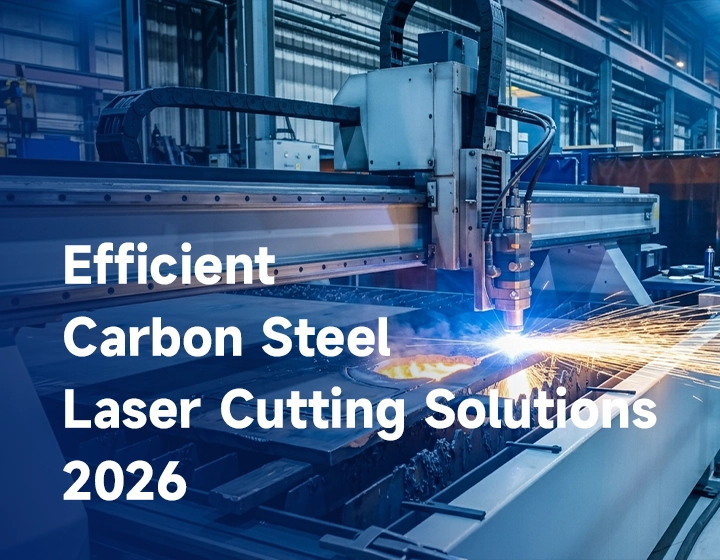
- Mild Steel:The workhorse material. Oxygen assist enables fast, efficient cutting up to significant thicknesses (20mm+ with high-power lasers), though edges oxidize. Nitrogen provides cleaner, weld-ready edges on thinner gauges.
- Stainless Steel:Nitrogen assist is standard for achieving brilliant, oxidation-free cuts essential for corrosion resistance and welding. Excellent cut quality on grades like 304 and 316, though reflective surfaces can pose challenges best handled by fiber lasers.
- Aluminum:Highly reflective and thermally conductive, making it trickier. Fiber lasers handle it effectively, especially with high-pressure nitrogen. Cut quality is good on thinner sheets (<10mm), but dross formation can increase with thickness. Alloys like 5052 cut cleaner than 6061.
- Copper & Brass:Extreme reflectivity requires high-power fiber lasers and specialized parameters (often nitrogen at very high pressure). Thin sheets are manageable, but thickness capacity is lower than steel. Excellent for electrical components and decorative pieces.
- Titanium:Requires inert gas (argon) to prevent embrittlement during cutting. Achieves good results but demands strict safety protocols due to flammability risks with titanium dust/chips.

Achieving Optimal Cut Quality:
Mastering lasercutting metal involves balancing numerous parameters for the desired edge. Key factors include:
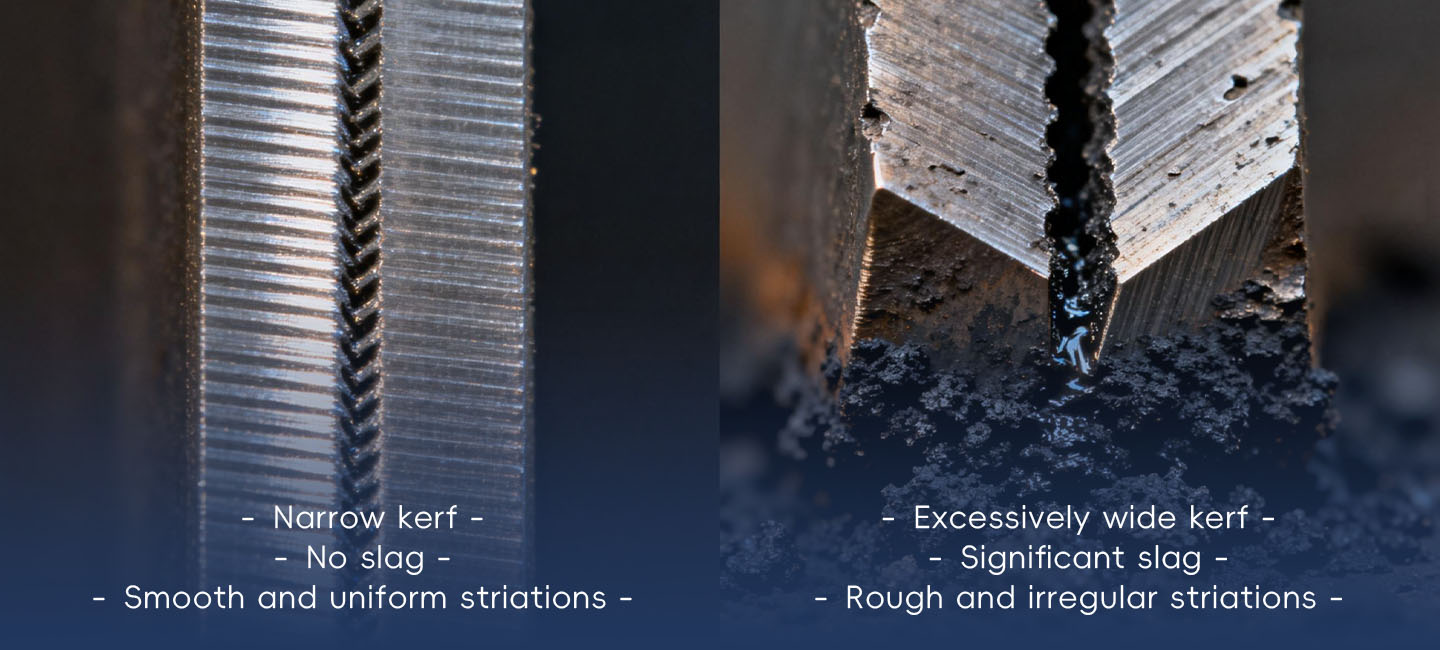
- Kerf Width:The width of the material removed by the laser beam. Affects dimensional accuracy of internal features and external contours. Minimized by a small spot size and optimized parameters.
- Dross:Molten slag adhering to the bottom edge. Eliminated by correct gas type/pressure, sufficient cutting speed, and precise focal point position. Nitrogen cutting is more prone to dross on thicker materials than oxygen.
- Striations:Vertical lines on the cut edge. Their pattern and roughness indicate parameter health. Smooth striations suggest optimal settings; rough or irregular patterns signal issues with speed, power, or gas.
- Heat Affected Zone (HAZ):The area where material properties are altered by the heat. Minimized by high cutting speeds and lower power where possible. Critical for materials where properties must be preserved near the cut.
- Perpendicularity & Taper:Ideally, the cut edge should be perfectly vertical. Taper (a wider kerf at the top or bottom) occurs due to beam divergence or incorrect focal position and can affect part fit-up.
Cost Drivers in Metal Lasercutting:
Understanding the economics of lasercutting metal is vital. Primary factors include:
- Machine Capital Cost & Depreciation:High-power fiber lasers represent a significant investment.
- Power Consumption:Electricity usage, particularly for the laser source and chiller.
- Assist Gas Consumption:High-purity nitrogen or oxygen can be a major operational cost, especially for high-pressure nitrogen cutting.
- Consumables:Nozzles, protective lenses, focus lenses, and sometimes window slides require regular replacement.
- Labor:Programming, setup, operation, and maintenance.
- Material Utilization:Nesting efficiency drastically impacts material cost per part.
- Cutting Time:Dictated by part complexity, material type/thickness, and laser power. Often calculated as cost per meter of cut or cost per pierce plus cost per minute.
The Future: Integration & Intelligence:
Lasercutting metal is not static. Trends point towards deeper integration with automation (robotic loading/unloading, automated storage/retrieval systems – AS/RS), enabling true lights-out manufacturing. Machine learning and AI are beginning to optimize cutting parameters in real-time, predict maintenance needs, and automatically adjust for material inconsistencies. Hybrid machines combining laser cutting with other processes like punching or bending in a single setup are gaining traction. Furthermore, advancements in beam shaping and control promise even greater precision, faster speeds on reflective materials, and improved edge quality on thick plates. As these technologies mature, lasercutting metal will continue to push the boundaries of what’s possible in metal fabrication, solidifying its role as an indispensable, intelligent manufacturing tool.


Top Stories
Product Categories
- Metal Laser Cutter
- Laser Welder Machine
- Laser Cleaner Machine
- Laser Marker Machine
- Press Brake Machine