News
2026 Global Fiber Laser Cutting Machine Procurement Ultimate White Paper
—— The Definitive Investment Guide for Business Owners, Factory Managers, and CFOs
Foreword: The 2026 Laser Fabrication Landscape
As we enter 2026, fiber laser technology is no longer a luxury for high-end manufacturing—it is the industrial standard. However, with the surge of ultra-high power (12kW–60kW), the integration of AI-driven monitoring, and volatile global supply chains, selecting the “right” machine is more complex than ever.
This white paper, synthesized from 122 deep-dive technical reports and hundreds of real-world procurement cases, deconstructs the logic of laser equipment investment for the modern era.
Chapter 1: Strategic Sourcing — Piercing the “Low-Price” Trap
When searching for a “laser cutter for sale,” the flood of low-cost listings is often the most significant pitfall for international buyers.
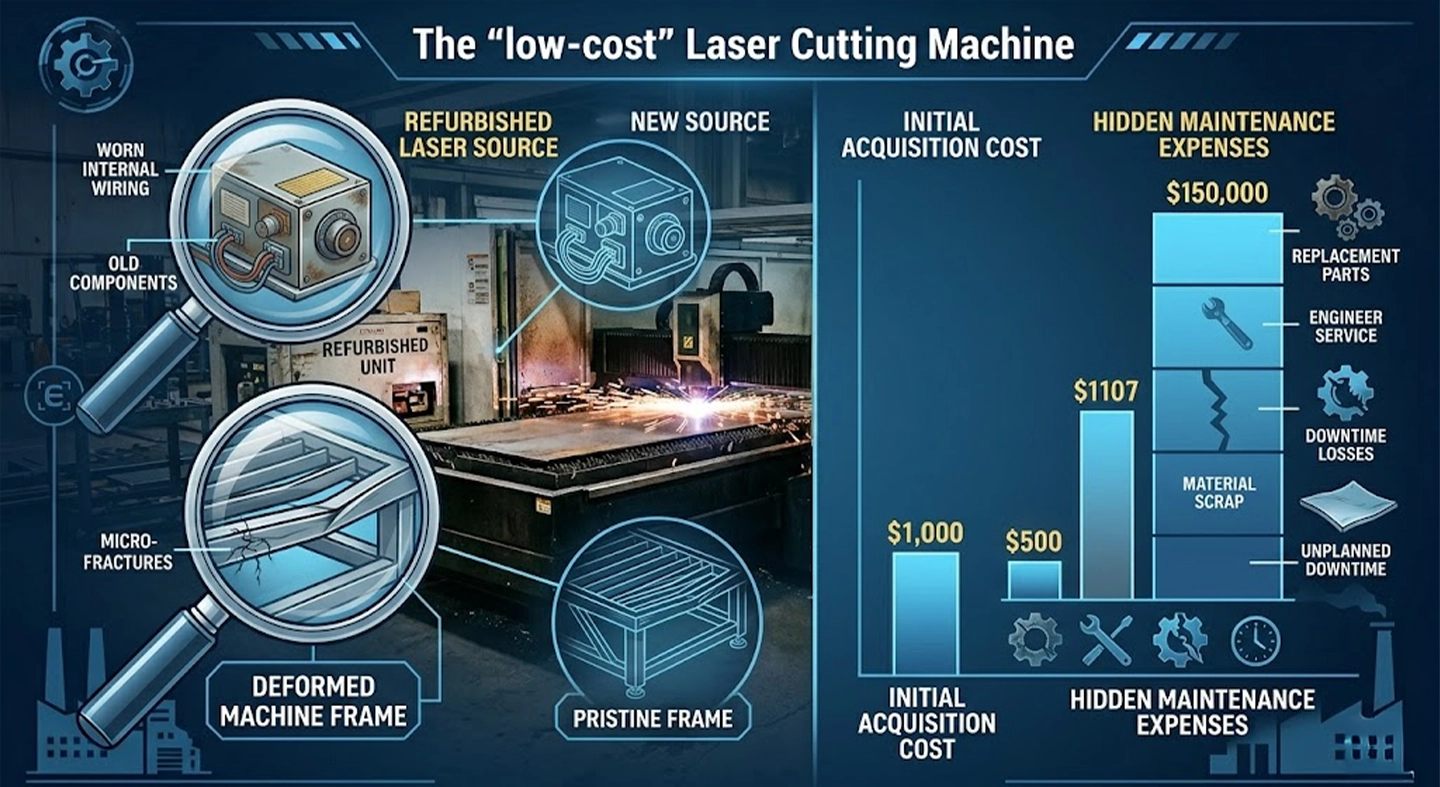
1.1 The Hidden Costs of Cheap Equipment
Many enterprises focus solely on the contract price, overlooking long-term risks:
- Refurbished Components: Low-cost manufacturers often use second-hand laser sources or refurbished servo motors, leading to severe power decay within six months.
- Structural Compromises: A welding bed without High-Temperature Annealingwill undergo irreversible deformation under high-load operations, resulting in a total loss of precision.
- The “Service Vacuum”: Low margins mean the manufacturer cannot support global after-sales. A week of downtime often costs more in lost production than the initial price difference.
1.2 Three Critical Questions Before You Buy
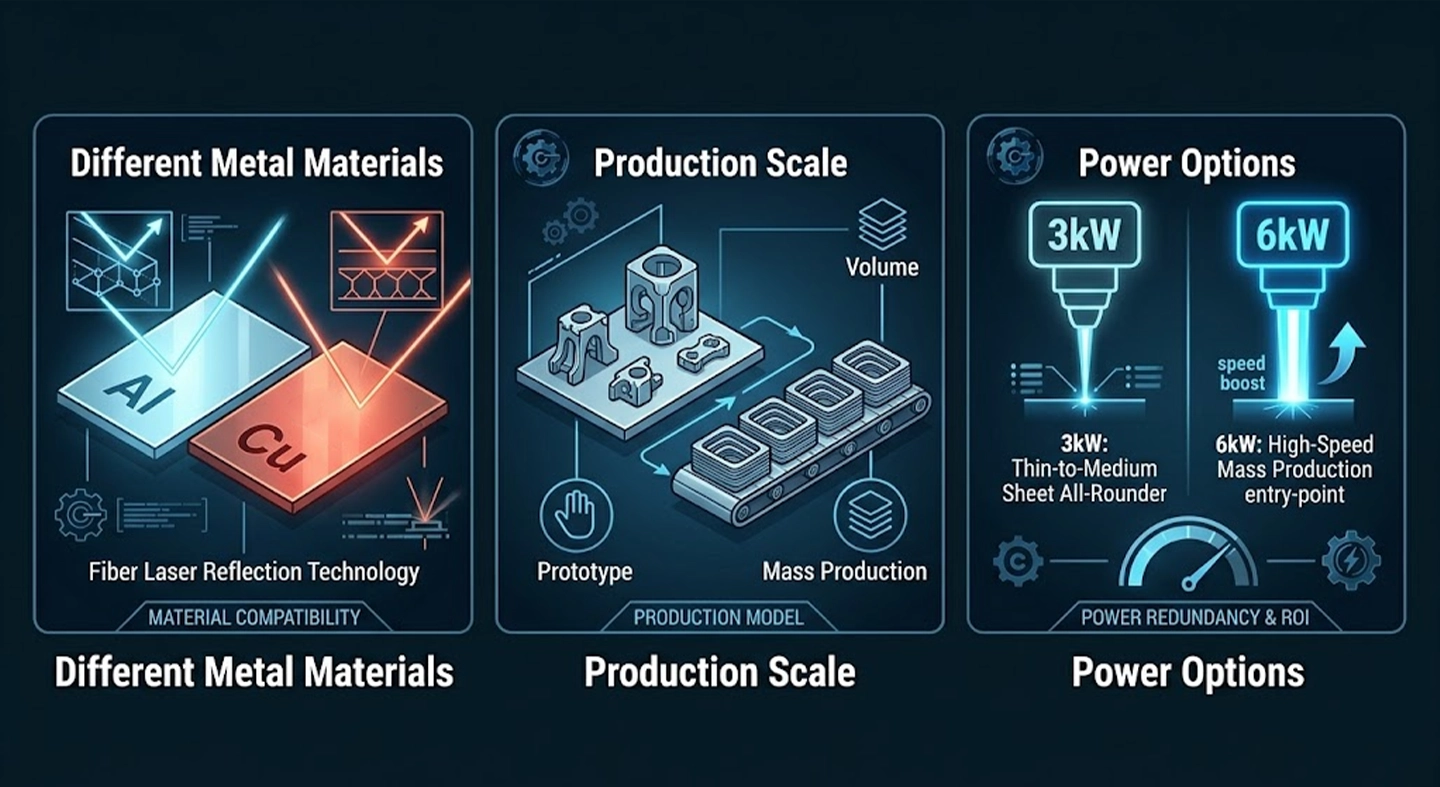
- Material Compatibility: Do you primarily cut carbon steel, or high-reflective metals like aluminum and copper?
- Production Volume: Is your focus on high-mix low-volume (precision-led) or mass production (speed-led)?
- Power Redundancy: In 2026, is 3kW enough? Or should you invest in 6kW to future-proof your business for the next three years?
Chapter 2: Cost Breakdown — Where Does Your Money Go?
Understanding the cost structure of a laser machine is the foundation of professional procurement.
2.1 Core Component Cost Distribution
- Laser Source (35%-45%): The premium for brands like IPG or top-tier domestic brands (Raycus/Max) is justified by power stability and beam quality (BPP).
- Machine Frame & Structure (20%-25%): A heavy-duty cast iron or reinforced plate-welded bed ensures 10+ years of vibration-free accuracy.
- Cutting Head & CNC System (15%): Smart heads with auto-focus and intelligent piercing significantly boost throughput.
- Motors & Motion System (10%): These define the machine’s acceleration (G) and repeatability.
2.2 The Value of “Soft” Assets
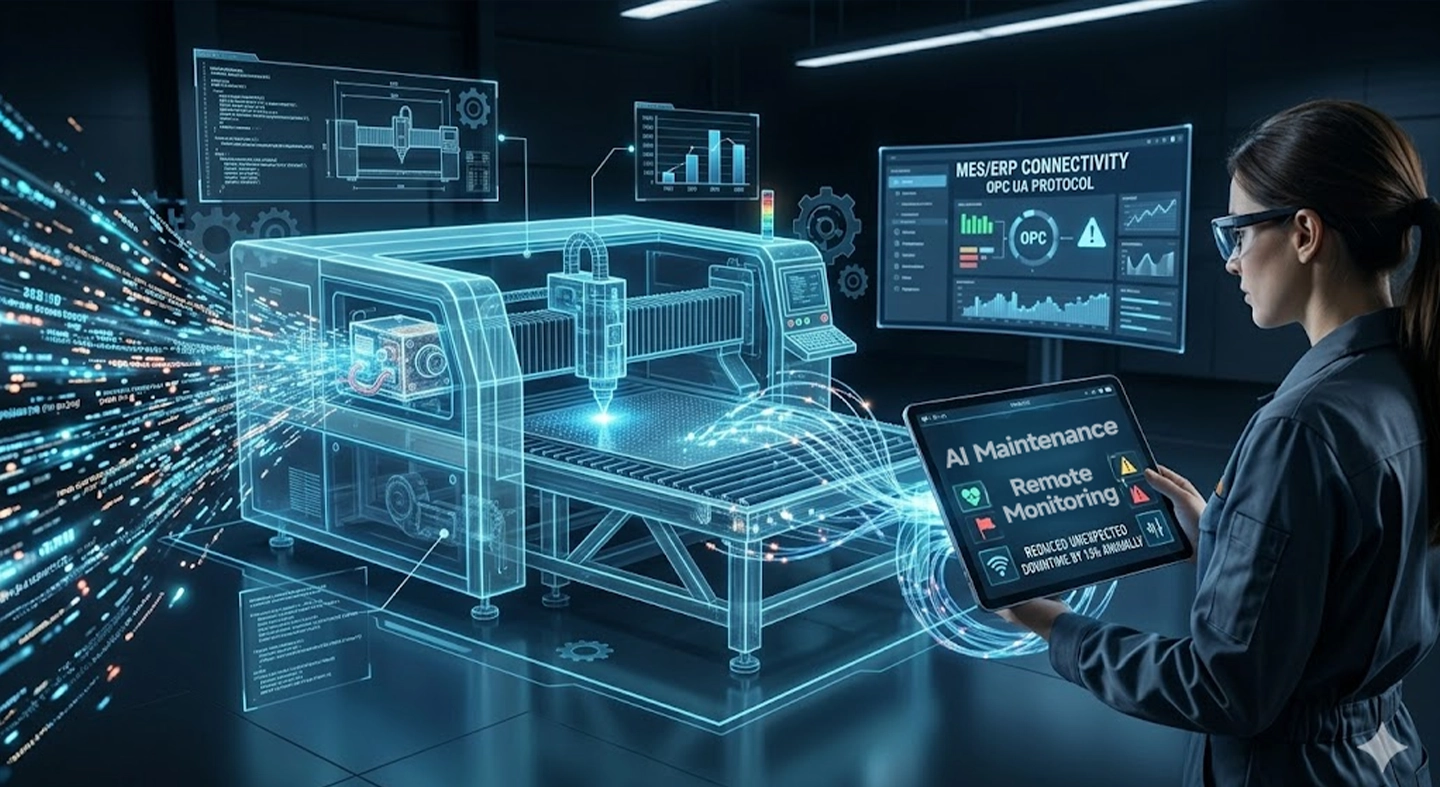
In 2026, a system equipped with AI Predictive Maintenance can reduce unexpected downtime by 15% annually. Don’t ignore the value of proprietary software and remote diagnostic capabilities.
Chapter 3: Financial Decision Modeling — Calculating ROI & TCO
For a CFO, a laser machine is not an expense; it is a capital investment analyzed via ROI (Return on Investment).
3.1 The TCO (Total Cost of Ownership) Model
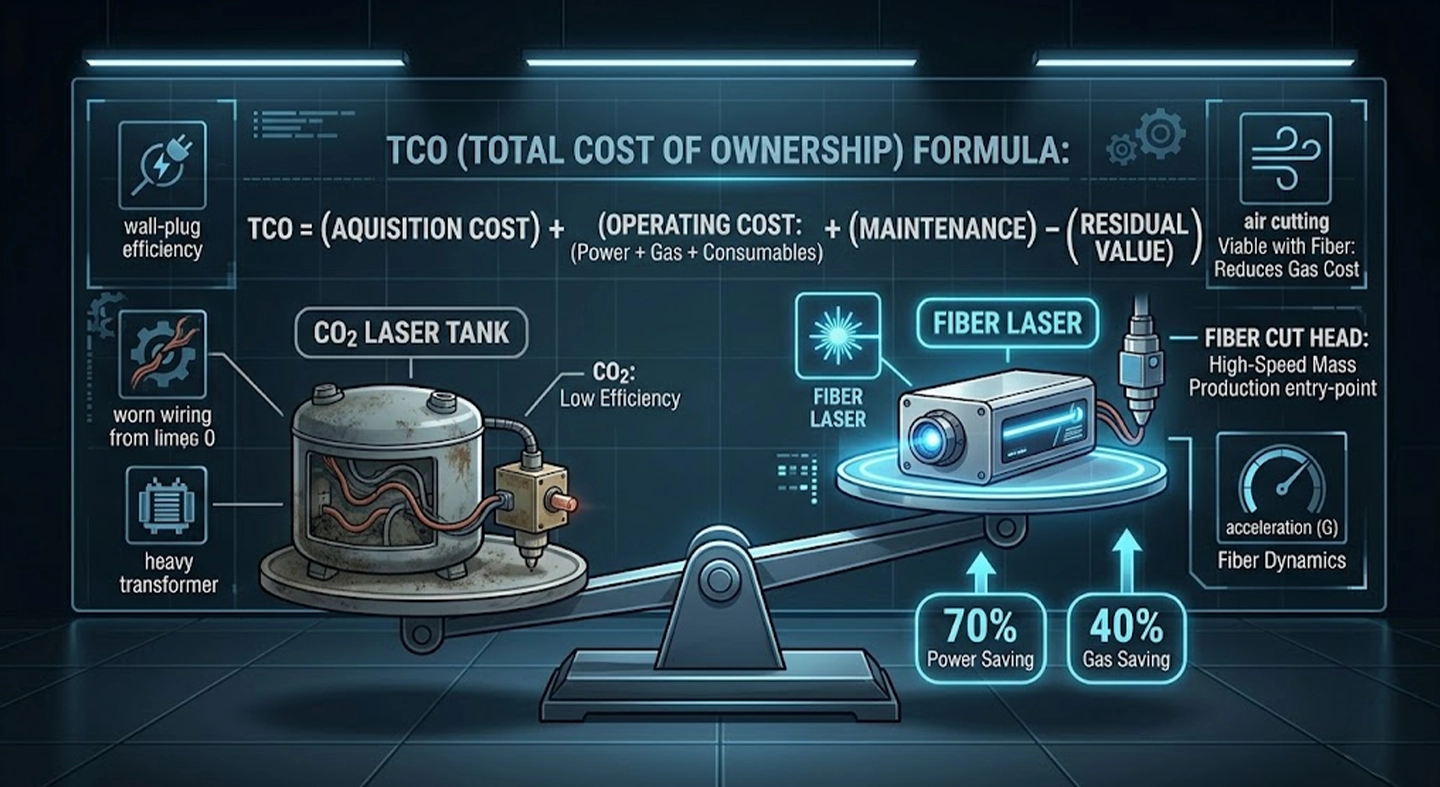
TCO = Purchase Price + Operating Costs (Power, Gas, Consumables) + Maintenance – Residual Value.
Energy Efficiency: Fiber lasers convert up to 30% of electrical input into laser energy, saving 70% in power compared to old CO2 technology.
Air Cutting Technology: By 2026, high-pressure air cutting has matured, reducing hourly gas costs by up to 40% for thin-to-medium sheets.
3.2 ROI & Break-even Analysis
The 3kW Case: Ideal for sheets <6mm. Typical ROI achieved within 14–18 months.
The 6kW Case: Increases speed by 200% for 10mm+ plates. Despite a 30% higher initial cost, the doubled capacity often shortens the ROI to 10–12 months.
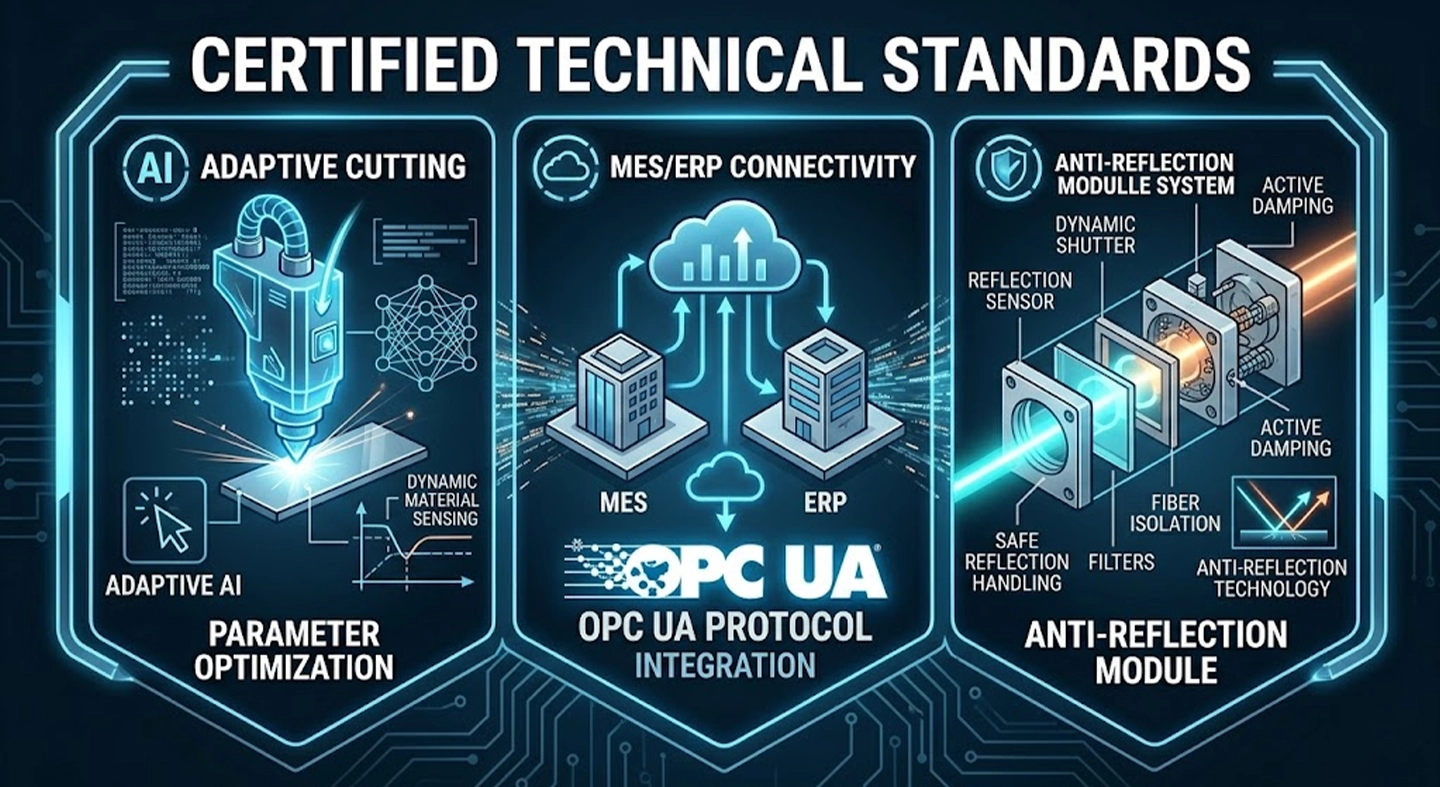
Chapter 4: 2026 Technical Standards — Beyond “Just Cutting”
If a machine lacks these features in 2026, it is obsolete upon arrival:
4.1 AI Intelligence & Digital Integration
- Adaptive Cutting: Systems that automatically sense material variations and adjust parameters in real-time.
- Smart Nesting: Optimizing sheet utilization to 95%+, where saving material equals direct profit.
- MES/ERP Connectivity: Equipment must support international protocols (like OPC UA) for seamless smart factory integration.
4.2 Structural Integrity for High Dynamics
Heavy-Duty Bed Necessity: Stress-relief through annealing is mandatory to handle 2.0G+ accelerations without shaking.
Anti-Reflection Technology: Mandatory optical protection for processing aluminum and copper to prevent back-reflection damage to the laser.
Chapter 5: FAQ — Top 5 Procurement Questions
Q1: What is the real difference between 1kW, 3kW, and 6kW?
A: It’s about stable processing thickness. 1kW is for precision thin sheets; 3kW is the “all-rounder” for 10mm steel; 6kW is the entry-point for high-speed industrial mass production.
Q2: Can I cut aluminum and copper safely?
A: Yes, provided the machine has a modern fiber laser with an anti-reflection module. Avoid older or low-end sources for these materials.
Q3: Is Air Cutting a viable alternative to Nitrogen?
A: Yes, for carbon steel and thin stainless where a slight oxide layer is acceptable. It drastically reduces per-part costs.
Q4: Why does the machine weight matter?
A: Weight equals stability. A 4-ton machine will vibrate at high speeds, ruining edge quality. A 10-ton annealed bed stays precise for a decade.
Q5: How do I evaluate a manufacturer globally?
A: Check their Spare Parts Hub proximity, their use of AR Remote Diagnostics, and their track record with Tier-1 components.
Conclusion: Stepping Into Smart Manufacturing
Buying a fiber laser cutting machine is a strategic move. In 2026, the competition isn’t about who has the cheapest machine, but who has the lowest cost-per-part and the highest uptime.

Top Stories
Product Categories
- Metal Laser Cutter
- Laser Welder Machine
- Laser Cleaner Machine
- Laser Marker Machine
- Press Brake Machine
Get Easy Solution