News
The Indispensable Engine: How Fiber Laser Sheet Cutting Machine Power Modern Manufacturing.
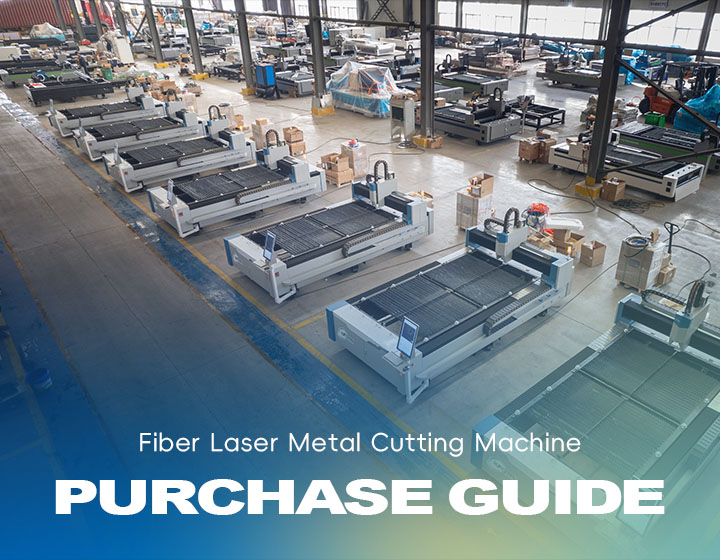
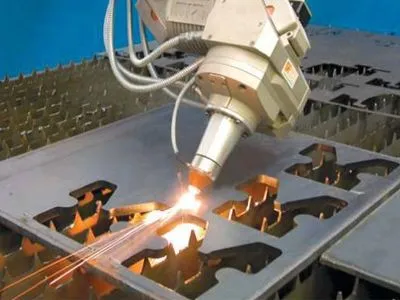
Fiber laser sheet cutting machine technology has become the unequivocal backbone of competitive sheet metal fabrication, relentlessly driving efficiency, precision, and flexibility. Imagine vast sheets of steel, stainless, or aluminum transformed into complex components within minutes, not hours; burr-free edges eliminating grinding departments; and digital designs materializing with microscopic accuracy, shift after shift. This relentless productivity stems from the core synergy of the fiber laser source, advanced motion control, and intelligent software, making the fiber laser sheet cutting machine far more than just a cutter – it’s a complete material processing system. From high-volume automotive part production to custom architectural features, its dominance is built on delivering tangible, measurable results that redefine shop floor economics.
Anatomy of a Production Powerhouse:
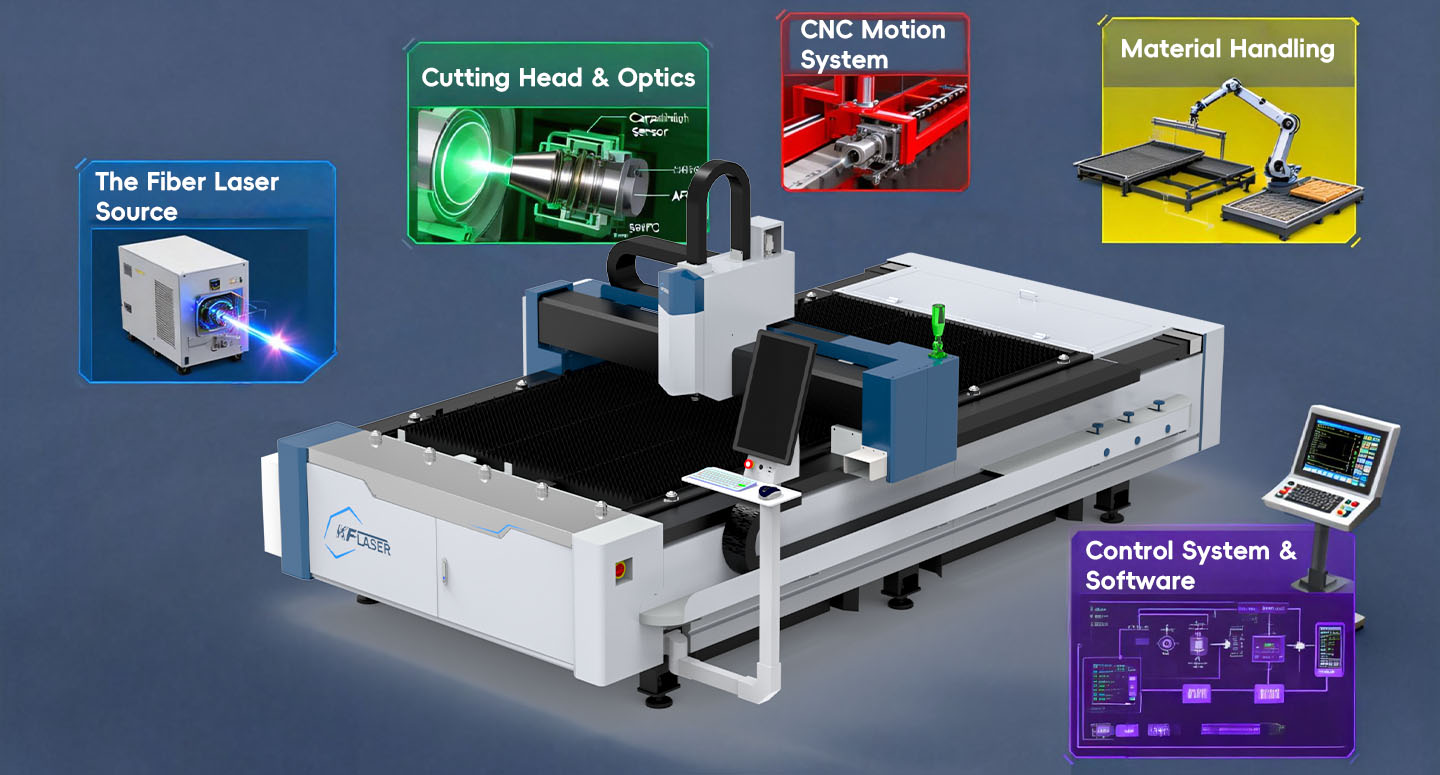
A modern fiber laser sheet cutting machine integrates several critical subsystems:
- The Fiber Laser Source:The heart. Doped optical fiber generates a high-power, high-brightness laser beam. Key advantages over CO2 include superior energy efficiency (often 2-3x better), exceptional beam quality for finer cuts, minimal maintenance (no gases, tubes, or mirrors in the resonator), and superior absorption on reflective metals like copper and brass. Power ranges from 500W for thin sheets to 30kW+ for thick plate.
- Cutting Head & Optics:The delivery system. A robust cutting head houses collimating and focusing lenses to concentrate the laser beam to its smallest possible spot. Features like capacitive height sensing (Auto Focus Control – AFC) maintain precise nozzle-to-material distance, even over uneven sheets. Exchangeable nozzles optimize gas flow for different materials and thicknesses.
- CNC Motion System:The precision conductor. Typically, a gantry system with high-performance linear drives and encoders moves the cutting head at high speeds (often >100 m/min rapid traverse) with exceptional accuracy (repetition within 0.03mm). Rigid machine construction minimizes vibration for perfect cut quality.
- Material Handling:The automation frontier. Options range from simple manual loading to fully automated systems:
- Loading Tables:Support sheets during manual placement.
- Pallets:Allow pre-loading sheets offline.
- Automated Loading/Unloading (L/U):Robotic arms or shuttle systems move sheets.
- Fully Integrated Cells:Combine L/U with storage towers (AS/RS) for unattended operation.
- Control System & Software:The brain. Modern CNCs feature intuitive interfaces, powerful processors for complex contours, and integrated CAD/CAM functionality. Nesting software maximizes material yield, while job management software optimizes production scheduling.
Material Capabilities: From Foil to Formidable:
The versatility of a fiber laser sheet cutting machine is staggering:
- Mild Steel:The primary application. Oxygen assist enables fast cutting of thicknesses from 0.5mm to over 30mm (with high power). Nitrogen provides clean edges for welding/painting on thinner gauges (<10-12mm).
- Stainless Steel:Nitrogen cutting is standard, producing brilliant, oxidation-free edges essential for corrosion resistance. Excellent quality on sheets from 0.5mm to 25mm+ (power-dependent).
- Aluminum:Fiber lasers handle reflectivity effectively. High-pressure nitrogen ensures dross-free cuts on sheets typically up to 15-20mm thick. Speed and quality are excellent on thinner gauges.
- Brass & Copper:High-power fiber lasers with specialized parameters (high-pressure nitrogen, specific pulse settings) can cut these reflective materials effectively, though thickness capacity is generally lower than steel.
- Other Metals:Titanium (requires inert gas), galvanized steel, some tool steels.

Quantifying the Competitive Edge:
Investing in a fiber laser sheet cutting machine delivers measurable advantages:
- Unmatched Cutting Speed:Dramatically faster than plasma, waterjet, or punching, especially on thin to medium thicknesses. Cycle times plummet.
- Superior Precision & Edge Quality:Near-net-shape parts with tight tolerances (±0.1mm), minimal kerf, and smooth edges reduce or eliminate secondary operations.
- Minimal Heat Affected Zone (HAZ):Preserves material properties near the cut edge, critical for structural components.
- Exceptional Flexibility:Change part designs instantly via software. No hard tooling required. Ideal for prototypes, short runs, and high-mix production.
- Reduced Operating Costs:Lower energy consumption than CO2 lasers, minimal consumables (compared to plasma nozzles/electrodes or waterjet abrasives), and less labor per part.
- Increased Material Utilization:Advanced nesting software optimizes part layout, significantly reducing scrap compared to fixed tooling or less efficient methods.

Optimizing Performance & Longevity:
Maximizing uptime and cut quality requires disciplined operation:
- Parameter Optimization:Develop and meticulously maintain cutting databases (speed, power, gas pressure, nozzle type, focal position) for every material/thickness combination.
- Rigorous Maintenance:Daily lens cleaning, nozzle inspection/replacement, regular checks of gas filters, chiller coolant levels, and linear guide lubrication. Quarterly/annual checks of beam path alignment and focus calibration.
- Gas Quality & Management:High-purity nitrogen (≥99.95%) is non-negotiable for stainless/aluminum cutting. Oxygen purity impacts mild steel speed and edge quality. Efficient gas delivery systems minimize waste.
- Operator Training:Empower operators to understand the process, perform basic maintenance, identify quality issues, and troubleshoot common problems.
- Cutting Condition Monitoring:Utilize machine software features to monitor pierce success, cut completion, and head crashes to prevent damage.
The Future is Integrated & Intelligent:
The evolution of fiber laser sheet cutting machine technology points towards greater autonomy and connectivity. Integration with factory-wide MES (Manufacturing Execution Systems) for real-time job tracking and scheduling is becoming standard. AI-driven process optimization, automatically adjusting parameters for material variations or desired edge characteristics, is on the horizon. Enhanced predictive maintenance, using sensors to monitor laser diode health, vibration, and optics condition, will minimize unplanned downtime. Furthermore, hybrid machines combining laser cutting with additive deposition or in-line bending are emerging, consolidating processes. As these advancements mature, the fiber laser sheet cutting machine will solidify its position as the central nervous system of the agile, efficient, and data-driven smart factory, continuously pushing the boundaries of what’s possible in sheet metal transformation.
Top Stories
Product Categories
- Metal Laser Cutter
- Laser Welder Machine
- Laser Cleaner Machine
- Laser Marker Machine
- Press Brake Machine