1. Introduction: The New Frontier of Thick Plate Laser Cutting
The industrial landscape of 2026 has been redefined by the leap into ultra-high-power fiber technology. Where once plasma or waterjet were the only options for heavy steel, thick plate laser cutting at power levels of 12kW, 20kW, and even 40kW has now become the gold standard. This evolution in thick plate laser cutting has transformed sectors like shipbuilding, bridge construction, and heavy machinery manufacturing. By offering superior precision, a smaller heat-affected zone, and significantly higher throughput, high-power thick plate laser cutting is the key driver of efficiency in modern heavy-duty fabrication.
2. The Mechanics of Beam Shaping in Thick Plate Laser Cutting
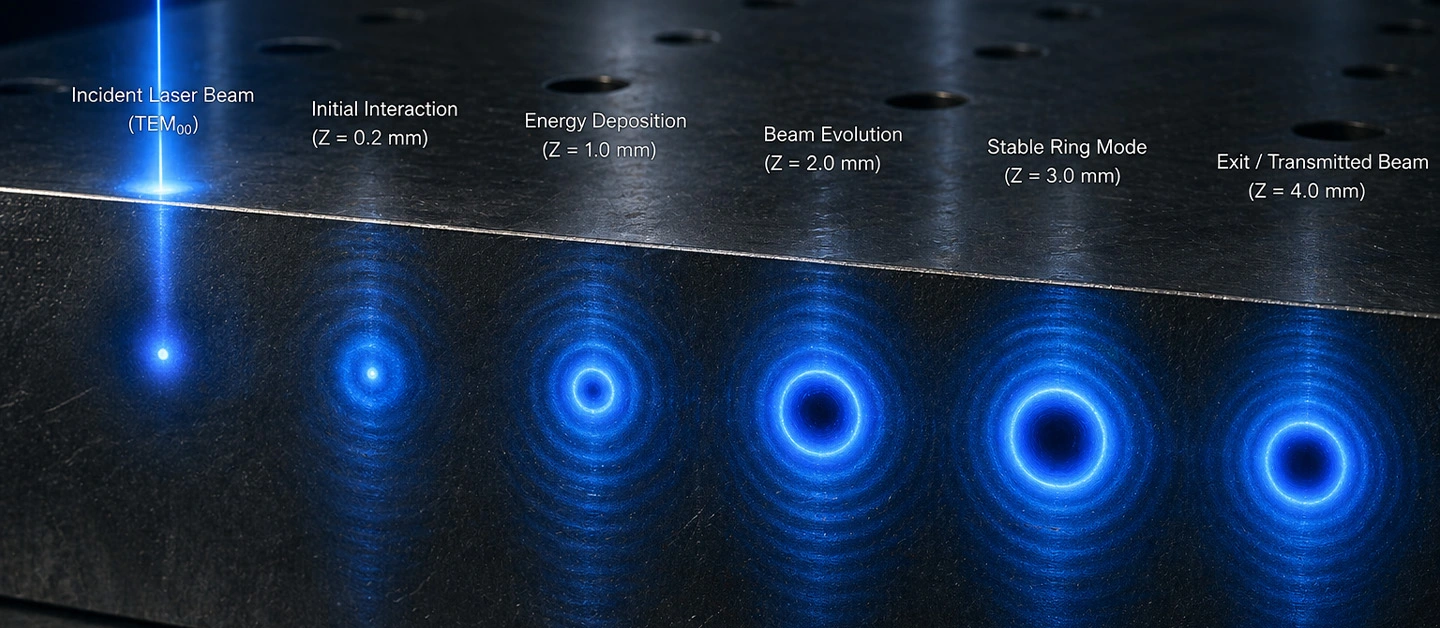
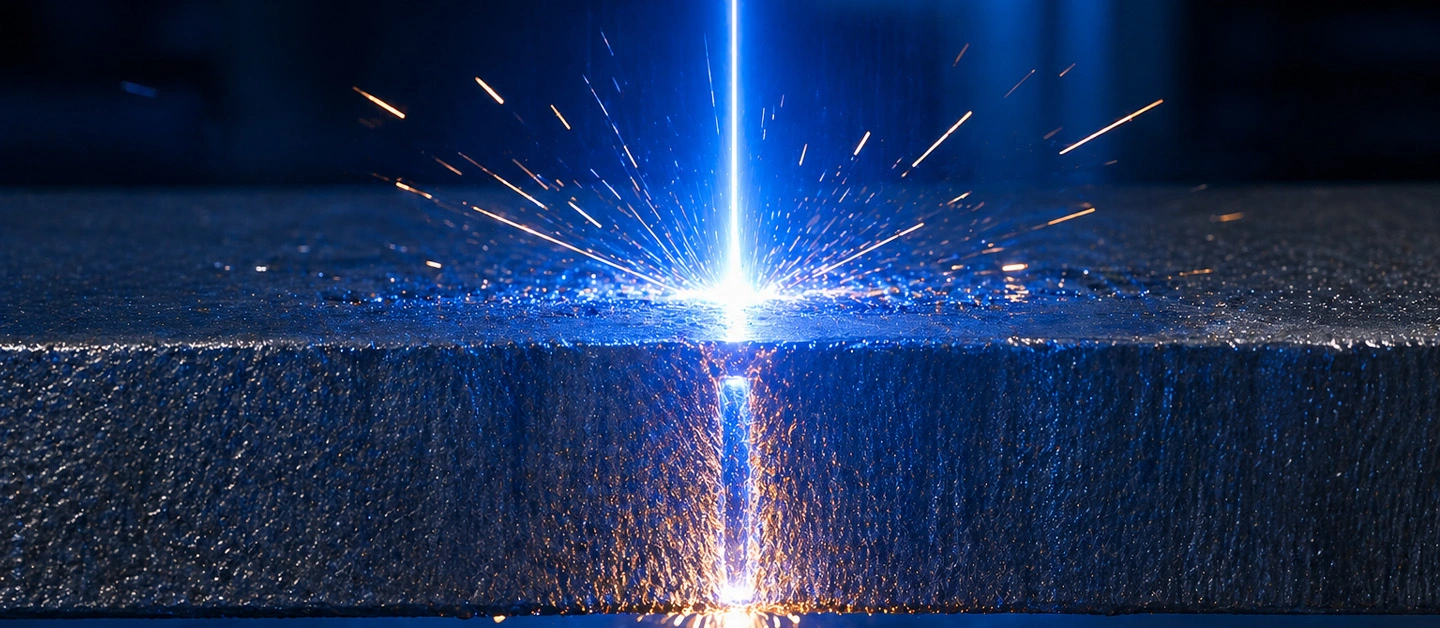
As plate thickness increases, the standard Gaussian laser beam profile becomes less effective. For successful thick plate laser cutting, the kerf (the width of the cut) must be wide enough to allow for efficient molten metal ejection.
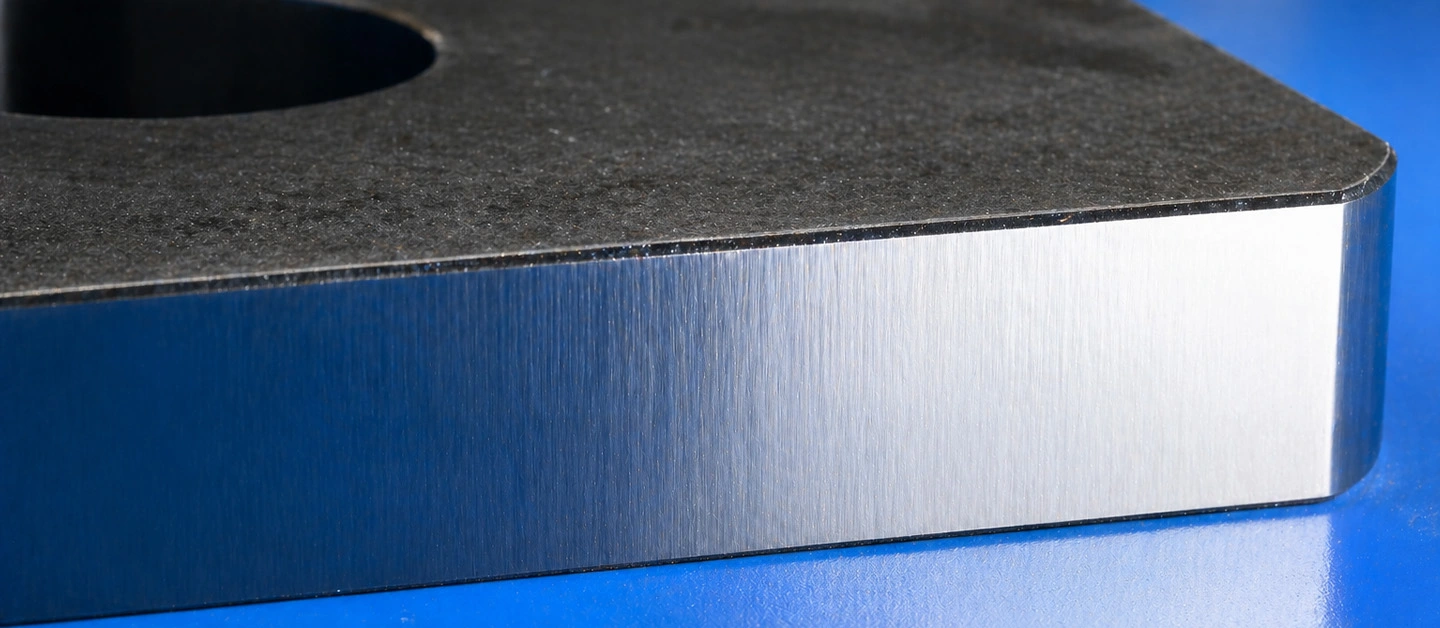
Modern thick plate laser cutting systems utilize Beam Shaping Technology (also known as Variable Beam Profile). By shifting the laser energy distribution from a concentrated spot to a “ring” or “doughnut” shape, thick plate laser cutting can create a wider kerf without increasing the overall heat input. This ensures that the assistant gas can blow through a 30mm or 40mm plate during the thick plate laser cutting process with minimal resistance, resulting in a vertical, high-quality edge.
3. High-Power Efficiency Benchmarks: 12kW to 40kW
The primary advantage of moving to higher power in thick plate laser cutting is the dramatic reduction in processing time, especially for piercing and long-distance travel. The following table illustrates the performance leap in thick plate laser cutting for 20mm carbon steel:
This data confirms that doubling the power in thick plate laser cutting more than doubles the productivity, making a compelling case for the ROI of ultra-high-power thick plate laser cutting equipment.
4. Structural Stability and High-Dynamics Mastery
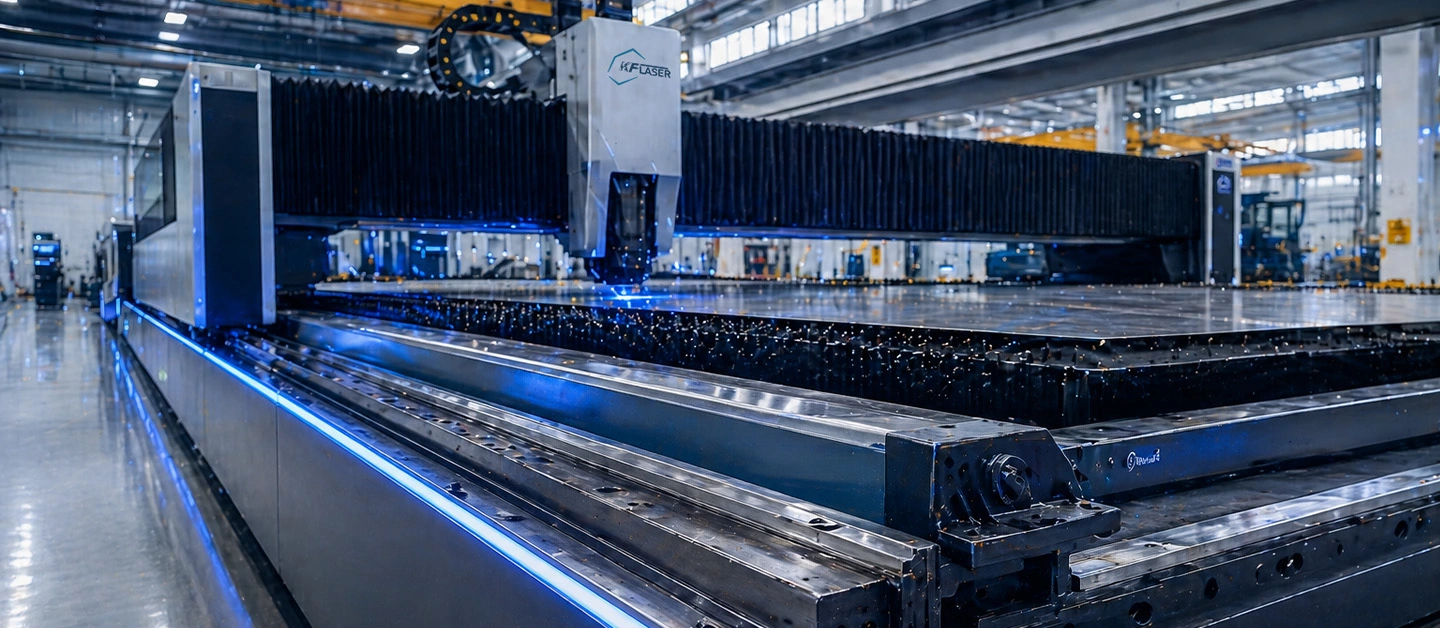
Executing thick plate laser cutting at high speeds requires a machine structure that can handle extreme inertia. When a 12kW+ thick plate laser cutting head moves at accelerations of 2.0G, any vibration will result in “wavy” patterns on the cut edge.
To prevent this, high-end thick plate laser cutting machines feature heavy-duty, reinforced frames that undergo High-Temperature Annealing to remove internal stresses. This structural integrity ensures that even during long-duration thick plate laser cutting sessions on 50mm plates, the machine maintains micron-level repeatability. Without this rigid foundation, the benefits of high-power thick plate laser cutting would be lost to mechanical inaccuracy.
5. Gas Dynamics for Ultra-Thick Sections
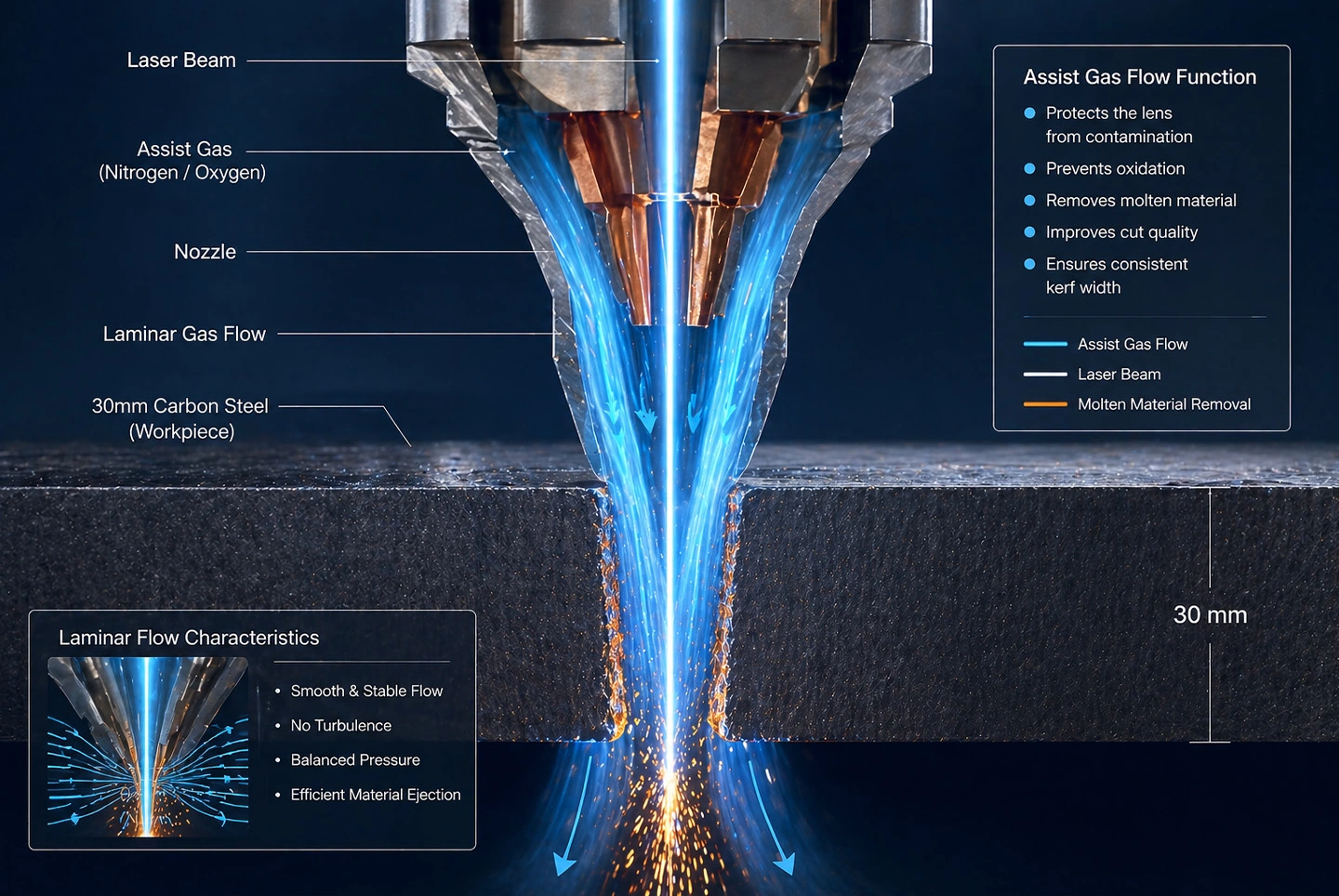
Assistant gas management is the unsung hero of thick plate laser cutting. For plates over 25mm, the pressure must be perfectly balanced. Too much pressure creates turbulence during thick plate laser cutting, while too little fails to clear the melt pool.
The following table compares gas consumption strategies for thick plate laser cutting:
Table 2: Assistant Gas Consumption in Thick Plate Laser Cutting
Gas Strategy
Material Type
Pressure (Bar)
Edge Result in Thick Plate Laser Cutting
Oxygen (O2)
Carbon Steel
0.5 – 1.5
Vertical / Slight Oxide
Nitrogen (N2)
Stainless/Aluminum
18 – 25
Bright / Non-Oxidized
Air (High Pressure)
Carbon Steel
12 – 16
Fast / Rougher Texture
In 2026, many thick plate laser cutting facilities are switching to high-pressure air for 12mm–16mm steel to balance speed and cost, while reserving oxygen for the most extreme thick plate laser cutting thicknesses.
6. Intelligent Piercing: The “Burst” Revolution
Piercing thick materials used to be the slowest part of the cycle. In 2026, thick plate laser cutting employs “Dynamic Frequency Piercing.” By rapidly modulating the laser frequency and focus height, thick plate laser cutting can penetrate 20mm steel in less than a second. This “instant piercing” minimizes the heat buildup at the start point, which is crucial for maintaining the structural integrity of the part during the subsequent thick plate laser cutting path.
7. AI-Enhanced Surface Monitoring for Thick Sections
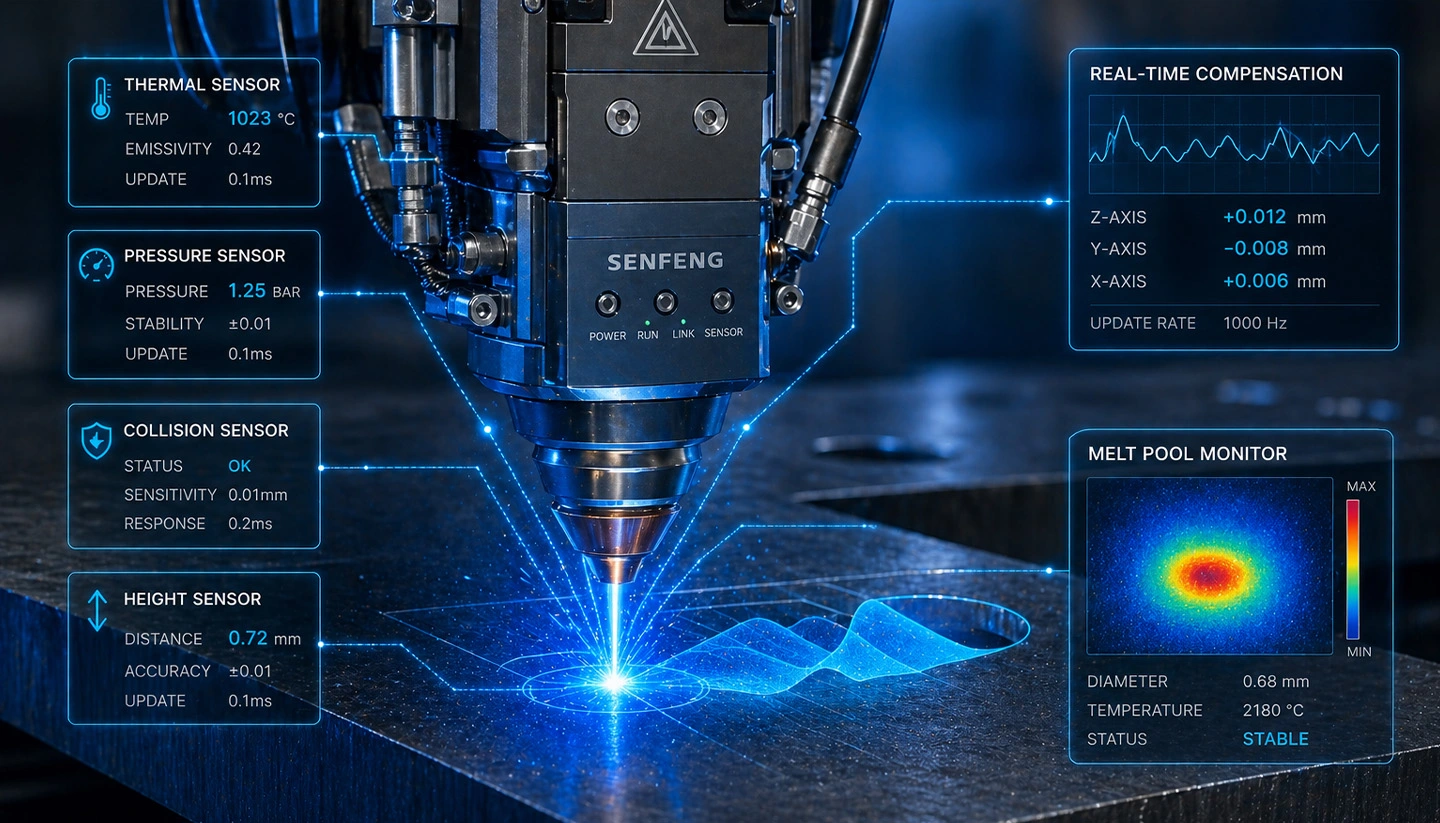
AI plays a critical role in 2026 thick plate laser cutting. High-power beams generate significant radiant heat. AI sensors in the thick plate laser cutting head monitor the plate’s thermal expansion in real-time. If the AI detects that the plate is shifting due to heat during thick plate laser cutting, it applies a dynamic coordinate compensation. This ensures that a 2-meter long thick plate laser cutting part remains accurate from start to finish.
8. Conclusion: The ROI of Power in Thick Plate Laser Cutting
As the manufacturing world demands larger and more complex components, mastering thick plate laser cutting is the ultimate competitive advantage. By integrating ultra-high-power resonators, advanced beam shaping, and AI-driven stability, your thick plate laser cutting operation can tackle the most demanding industrial projects. In 2026, the power to perform high-quality thick plate laser cutting is the power to lead the market.