News
Engineering Resilience: The Role of Heavy-Duty Machine Bed in Fiber Laser Performance
1. Introduction: The Bed as the Foundation of Laser Precision
In the sophisticated world of industrial laser fabrication, the Heavy-Duty Machine Bed is the unsung hero that determines the long-term success of the entire system. While laser power and software interfaces often steal the spotlight, it is the Heavy-Duty Machine Bed that provides the mechanical foundation required to support extreme speeds and micron-level accuracy. For any manufacturer investing in fiber laser technology, understanding the engineering behind a Heavy-Duty Machine Bed is the key to ensuring that their investment remains productive for a decade or more. A high-quality Heavy-Duty Machine Bed is not just a frame; it is a precisely engineered vibration-damping platform.
2. Material Science: Cast Iron vs. Reinforced Plate-Welded Structures
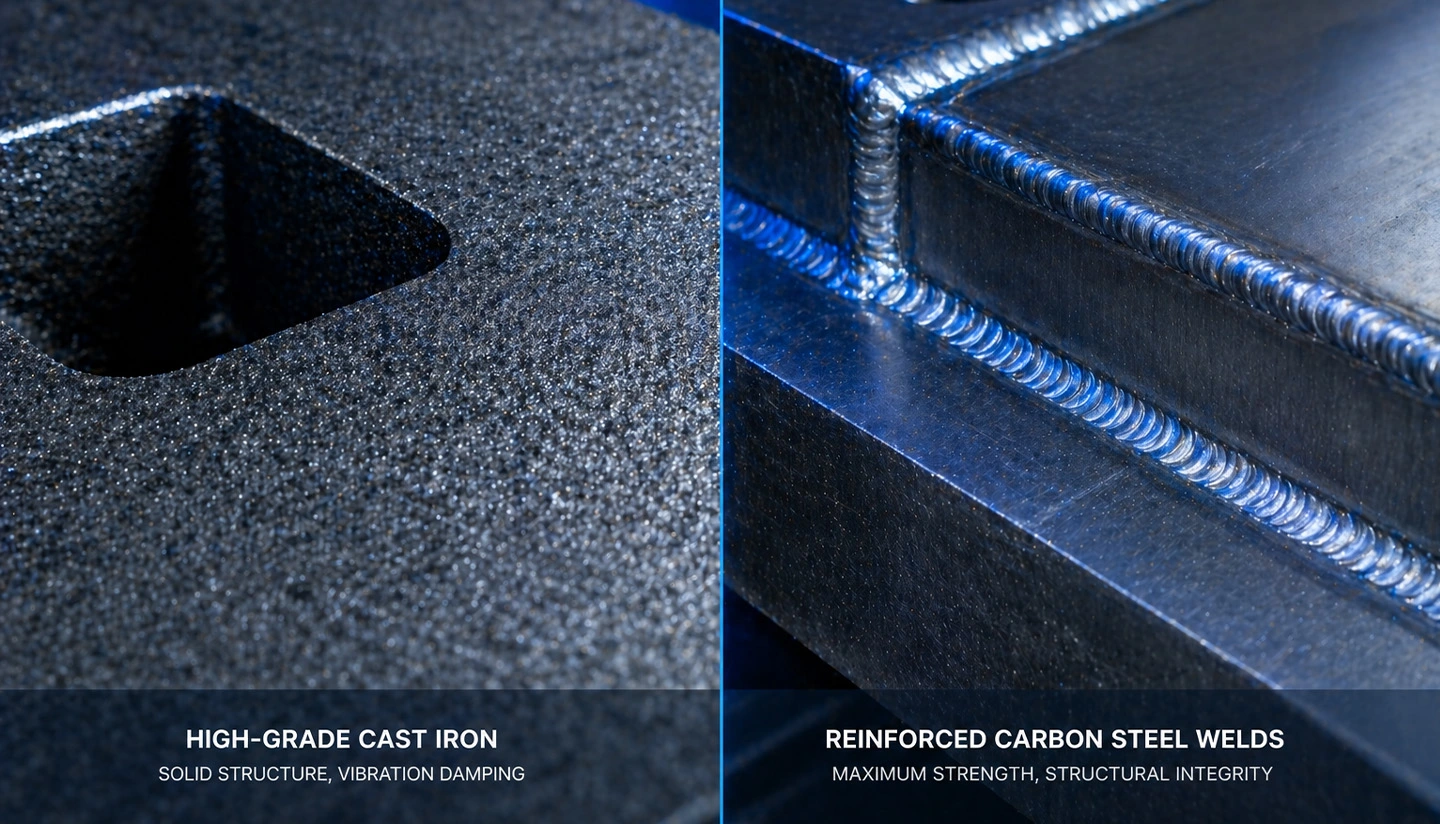
When evaluating a Heavy-Duty Machine Bed, the choice of material and construction method is paramount. There are two primary schools of thought in modern Heavy-Duty Machine Bed engineering:
Cast Iron (Monoblock) Beds: Known for their exceptional damping capacity, a cast iron Heavy-Duty Machine Bed excels at absorbing the high-frequency vibrations generated during high-speed cutting. This type of Heavy-Duty Machine Bed is typically used in ultra-precision machines where vibration is the enemy of edge quality.
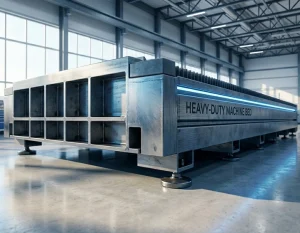
Reinforced Plate-Welded Beds: Utilizing high-tensile carbon steel, this Heavy-Duty Machine Bed is designed for the massive loads of ultra-high-power lasers (12kW-40kW). A plate-welded Heavy-Duty Machine Bed offers incredible structural rigidity and can be customized with internal honeycombed ribbing to support the weight of 50mm metal plates.
Regardless of the material, a professional Heavy-Duty Machine Bed must have a high mass-to-power ratio. As laser power increases, the Heavy-Duty Machine Bed must become heavier and more rigid to counteract the forces of inertia during rapid acceleration.
3. The Criticality of High-Temperature Annealing (Stress Relief)
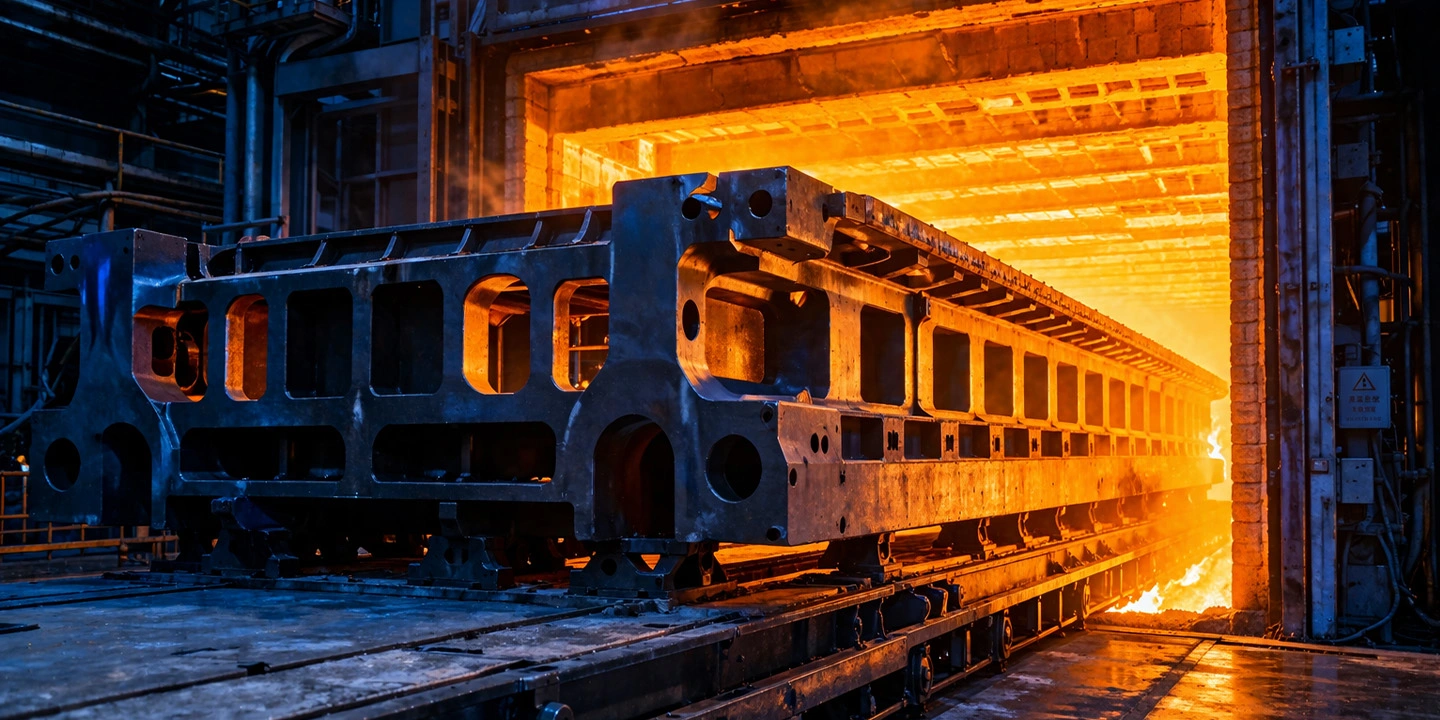
Perhaps the most important factor in a Heavy-Duty Machine Bed’s durability is the heat treatment process. During the welding or casting of a Heavy-Duty Machine Bed, internal stresses are naturally created within the metal. If these stresses are not removed, the Heavy-Duty Machine Bed will eventually warp or deform—even by just a few microns—leading to a permanent loss of cutting accuracy.
The gold standard for a Heavy-Duty Machine Bed is 600°C High-Temperature Annealing. This process involves heating the entire Heavy-Duty Machine Bed in a specialized furnace for several hours and then cooling it at a controlled rate. This “stress relief” ensures that the Heavy-Duty Machine Bed remains structurally stable for its entire 10-to-15-year lifespan. Any manufacturer that skips this step in their Heavy-Duty Machine Bed production is selling a machine with a built-in expiration date.
Table 1: Impact of Heat Treatment on Heavy-Duty Machine Bed Durability
Process Stage | Purpose for the Heavy-Duty Machine Bed | Long-Term Benefit |
Vibration Aging | Initial settling of the metal structure. | Prevents early-stage misalignment. |
600°C Annealing | Eliminates molecular-level internal stresses. | Guarantees Heavy-Duty Machine Bed stability for 10+ years. |
Natural Aging | Allowing the bed to sit in a controlled environment. | Final stabilization of the Heavy-Duty Machine Bed. |
Sandblasting | Removing oxidation and preparing the surface. | Corrosion resistance for the Heavy-Duty Machine Bed. |
4. Ribbed Structural Engineering and Load Capacity
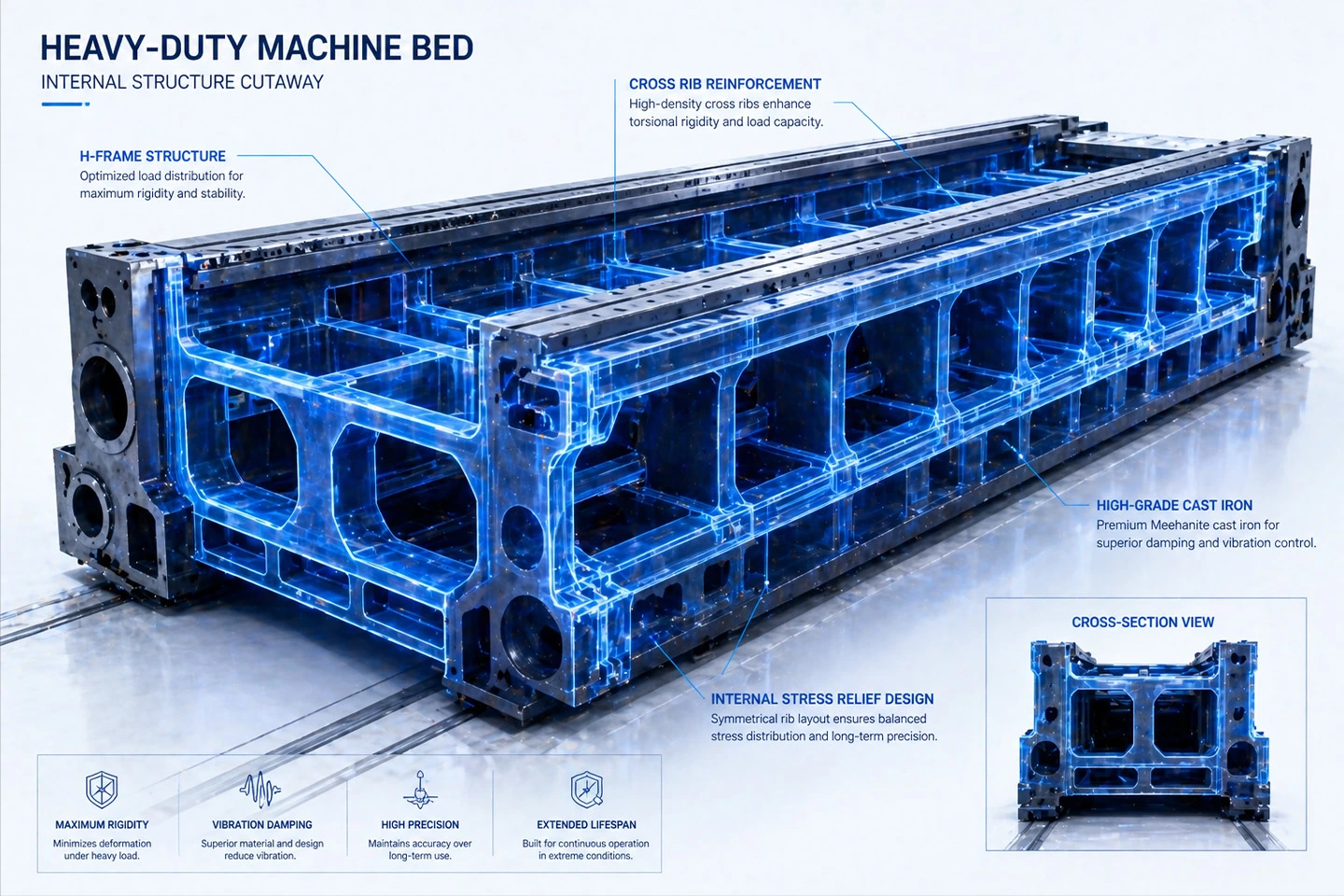
The internal geometry of a Heavy-Duty Machine Bed is what allows it to handle the immense weight of industrial raw materials. A high-performance Heavy-Duty Machine Bed utilizes a “Ribbed Frame Design,” inspired by aerospace engineering. These internal cross-members prevent the Heavy-Duty Machine Bed from sagging under the weight of thick carbon steel plates.
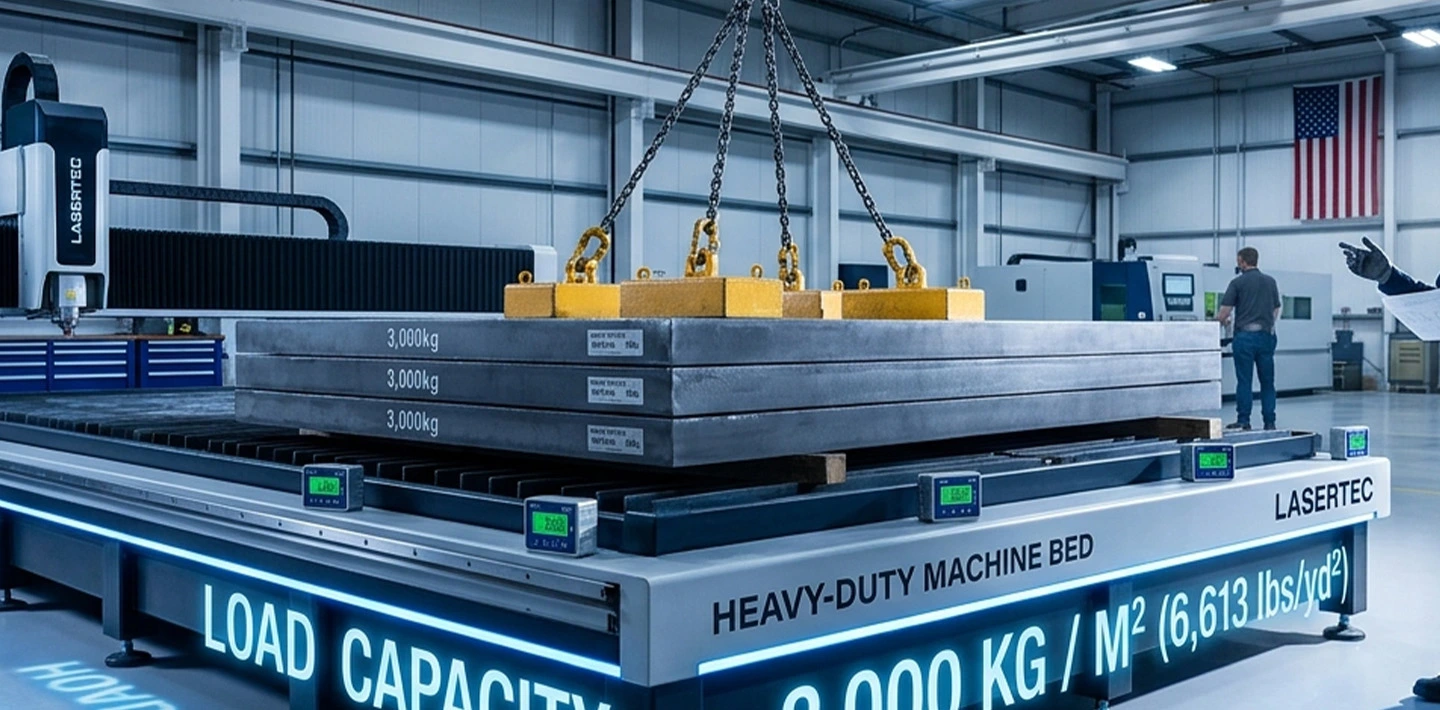
For machines designed for Thick Plate Cutting, the Heavy-Duty Machine Bed must support up to 2,000 kg per square meter. This requires the Heavy-Duty Machine Bed to have a reinforced support structure that is decoupled from the precision motion rails, ensuring that the heavy weight of the plate does not impact the mechanical accuracy of the Heavy-Duty Machine Bed.
5. Vibration Damping and G-Acceleration Mastery
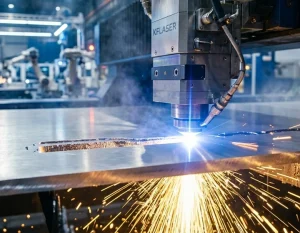
Modern fiber lasers operate at accelerations of 1.5G to 2.5G. Every time the cutting head changes direction, it sends a shockwave through the Heavy-Duty Machine Bed. If the Heavy-Duty Machine Bed is too light or poorly designed, these vibrations create “chatter marks” on the cut edge of the metal.
A superior Heavy-Duty Machine Bed is designed with a high “Damping Coefficient.” By using a combination of heavy structural steel and precision-machined mounting surfaces, a Heavy-Duty Machine Bed can neutralize these vibrations in milliseconds. This stability is what allows for the high-speed processing of thin sheets while maintaining a mirror-like finish on the edges.
6. Precision Machining of the Heavy-Duty Machine Bed
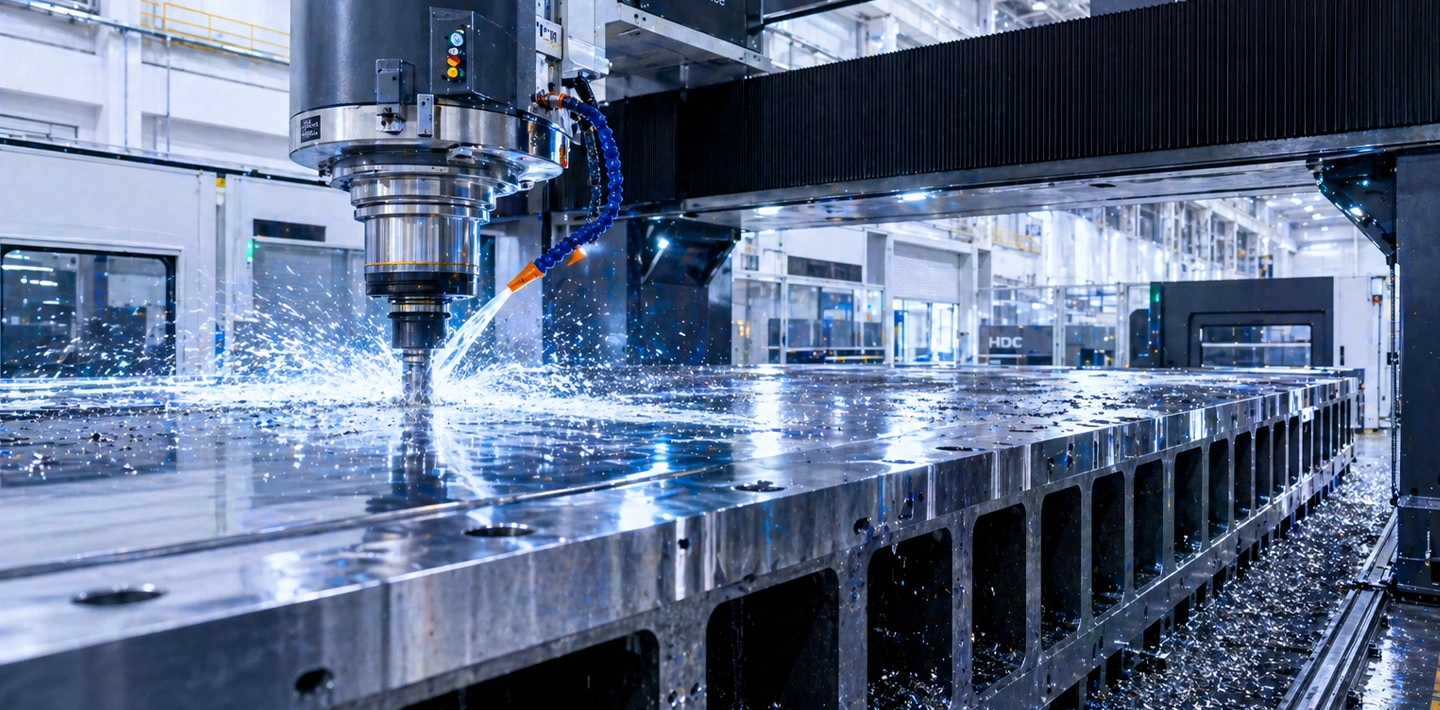
After the heat treatment, the Heavy-Duty Machine Bed must be machined to create the mounting surfaces for the guide rails and racks. This requires a large-scale, 5-axis gantry milling machine. The mounting surfaces of the Heavy-Duty Machine Bed must be flat within a tolerance of ±0.02mm over the entire length of the bed (which could be up to 12 meters). This level of precision on a Heavy-Duty Machine Bed is what ensures the smooth, silent motion of the gantry and extends the life of the servo motors and gearboxes.
Table 2: Technical Specifications of a Premium Heavy-Duty Machine Bed
Feature | Specification Requirement | Resulting Advantage |
Bed Weight | 4,000kg – 12,000kg (Depending on size) | High inertia for vibration suppression. |
Material Type | Q235B / Q345 High-Tensile Carbon Steel | Maximum rigidity for the Heavy-Duty Machine Bed. |
Machining Accuracy | ±0.02 mm Mounting Surface Flatness | Extended life for motion components. |
Support System | Decoupled Weight-Bearing Frame | Accuracy remains independent of plate weight. |
7. AI-Driven Health Monitoring for the Machine Bed
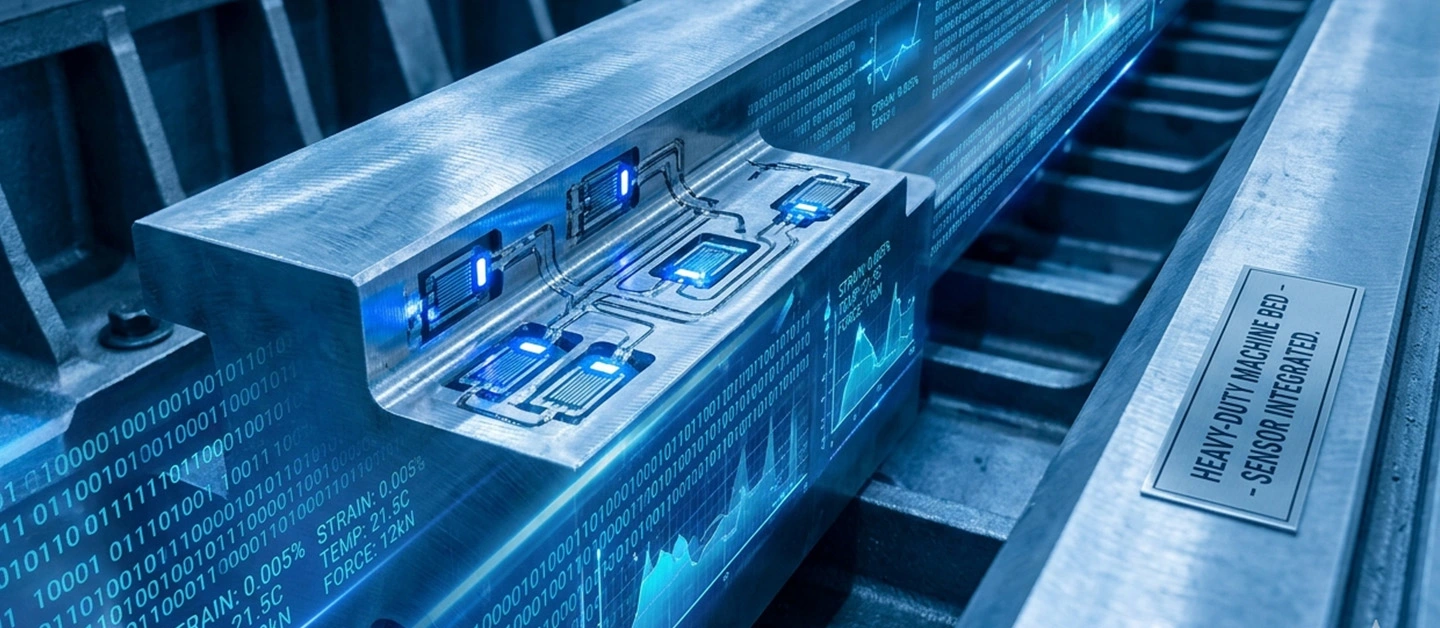
In 2026, the Heavy-Duty Machine Bed has become “smart.” Integrated strain gauges and thermal sensors within the Heavy-Duty Machine Bed monitor for any signs of mechanical fatigue or thermal expansion. If the factory environment becomes too hot, the AI system compensates the cutting path based on the known expansion coefficient of the Heavy-Duty Machine Bed. This ensures that even in non-climate-controlled environments, the Heavy-Duty Machine Bed delivers consistent parts from the first shift to the last.
8. Conclusion: The Long-Term ROI of a Heavy-Duty Machine Bed
Investing in a laser machine is a 10-year decision. While a cheaper, lighter frame may seem attractive initially, only a Heavy-Duty Machine Bed that has been properly annealed and engineered for high dynamics can provide a sustained return on investment. The Heavy-Duty Machine Bed is the heart of your production capacity; its durability is your facility’s reliability. Choosing a machine with a world-class Heavy-Duty Machine Bed is the most effective way to ensure that your business remains a leader in precision fabrication for years to come.

Top Stories
Product Categories
- Metal Laser Cutter
- Laser Welder Machine
- Laser Cleaner Machine
- Laser Marker Machine
- Press Brake Machine
Get Easy Solution